



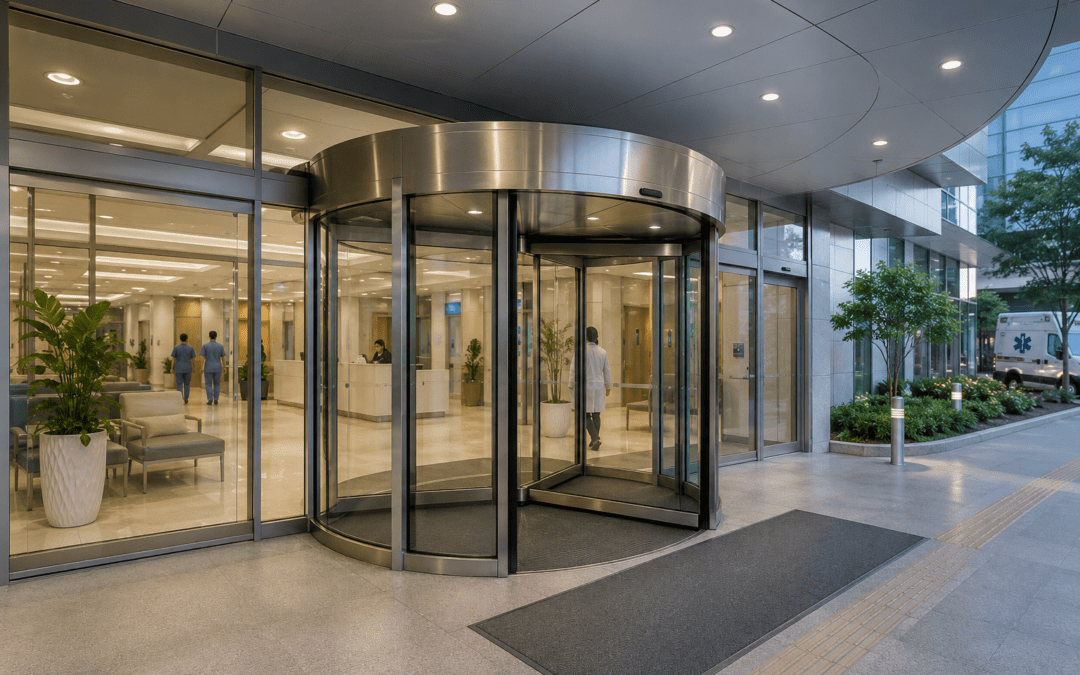
Designing Seamless Hospital Entrances Through Smart Access Solutions
The entrance to the hospital is no longer just a place for entry, but is also an important element of the patient experience, the flow of the hospital, and hospital hygiene and safety. Entrance systems have an impact on how patients, visitors, and medical staff move within a facility, how they can access it, and how it operates efficiently from the first moment they step in.
Smart entryways, like automatic sliding doors, swing doors, revolving doors, folding systems and speed gates are essential to modern hospital environments to provide safer and smoother environments. These systems are designed to help decrease physical contact, control access, enhance traffic flow, satisfy the rapid pace of healthcare environments and keep clean and professional architectural aesthetics.
With the changing dynamics of healthcare, hospitals are increasingly adopting smart entrance solutions; a combination of automation, accessibility, and security. Modern entrance systems are making a significant impact in developing efficient, patient-centric healthcare environments, whether in main lobby spaces, staff-only zones or for high-traffic corridors.
The Role of Entrance Systems in Modern Healthcare Facilities
Security and controlled access play a critical role in healthcare facilities, ensuring a safe, efficient, and well-organized environment. Hospitals are open 24 hours a day with patients, visitors, doctors, nurses, and support staff visiting and moving in and out from various departments and entry points. This is a constant occurrence and, in order to facilitate and facilitate access to the healthcare facility and ensure the protection of sensitive or restricted areas, entrance systems are required that are both smooth and accessible.
Modern access control systems are one of the key instruments in assisting hospitals to strike this balance between access and security. The operating rooms, staff-only corridors, pharmacies, laboratories, data rooms and emergency departments are common spaces that may only be accessible by approved staff. Meanwhile, public spaces like reception areas, waiting rooms and main entrances need to be welcoming and easy to navigate for patients and visitors. In hospitals, intelligent access systems are used to control this flow efficiently without interfering with the hospital’s daily activities.
Not only physical security, but also valuable medical equipment, confidential patient information and critical operational areas have to be protected in healthcare facilities. Access without restrictions can lead to the risk of theft, misuse of equipment or unauthorized access into sensitive departments. Combining access control solutions, automatic doors, speed gates, touchless entrance and exit systems ensures hospitals can have safer and more controlled environments while keeping traffic flowing efficiently across the building.
Today, many healthcare organizations are turning to state-of-the-art entrance systems that feature centralized access control, role-based access control, and touchless authentication options. These systems enable the administrator to set the level of access that is available to each staff member and according to the need of operations, allowing only authorized staff members to enter into certain areas. In addition, touchless solutions help to enhance hygiene by reducing the number of touchpoints on shared surfaces, particularly in healthcare settings where hygiene is a critical concern.
In addition to security and hygiene, access control systems also enhance the patient and visitor experience. Seamless entrance systems help to decrease congestion, increase movement in high traffic areas and help healthcare facilities function more efficiently during busy periods. With proper integration, modern hospital entrance solutions are capable of integrating safety, accessibility, automation, and architectural design into a comprehensive system that enhances the performance of hospitals while providing quality patient care.
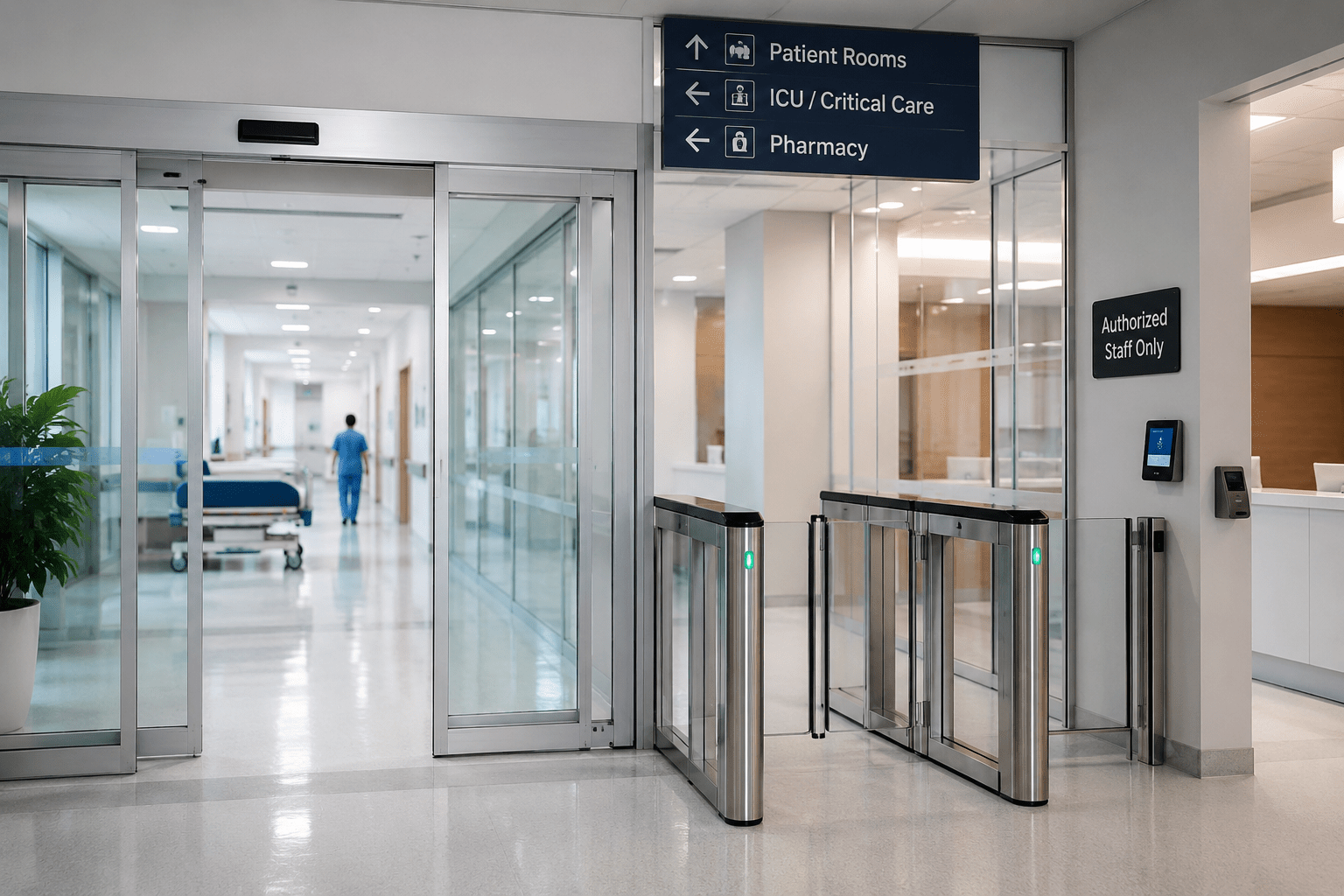
Why Touchless Access Matters in Hospitals
Hygiene, safety and operational control are always paramount in healthcare environments, but this need has increased as a result of the pandemic to create a smarter, touchless environment. Hospitals are a place where people constantly move in and out of the building, whether they are patients, visitors, doctors, nurses or support staff, entrance and access systems are a fundamental aspect to ensuring safety and efficiency. Older systems like physical keypads, ID scanning points and communal touch surfaces can cause congestion in higher traffic areas, adding to the challenges of managing smooth movement and maintaining social distancing.
Thus, touchless access control systems are becoming an important component in today’s hospital design. The technologies enable authorized people or medical staff to move through a secured area without coming into direct contact with one another, which helps to mitigate needless physical interactions and enhance convenience and efficiency. Smartphone-based authentication, Bluetooth technology for access control, motion sensors and automatic doors are some of the solutions that can help healthcare facilities provide a more hygienic and efficient environment that will assist in patient care and staff movement.
Today’s touchless systems also work in conjunction with larger healthcare safety programs. Hospitals can leverage features like occupancy management, contact tracking, mask detection and controlled access scheduling to control movement in sensitive areas. Some systems can temporarily restrict the amount of people allowed to enter a particular zone, which helps to keep organized traffic in waiting areas, corridors, restricted departments, etc.
In addition to infection control, touchless entrance technologies have a positive impact on user experience in healthcare facilities. From the medical staff’s perspective, they can navigate the facility’s departments more efficiently, while for visitors, access to approved areas is swiftly and easily facilitated, and for patients, they can enter a facility more smoothly and easily. They can also enable emergency response operations as the rapid and controlled access is available when required.
Touchless access is not anymore considered a short-term solution to address health issues, it’s now seen as a long-term enhancement of hospital infrastructure. Incorporating automatic doors, smart access control, and touchless technologies in healthcare facilities can help hospitals build safer, more efficient, and future-ready, responding to the demands of modern healthcare operations.
Automatic Sliding Doors for High-Traffic Hospital Environments
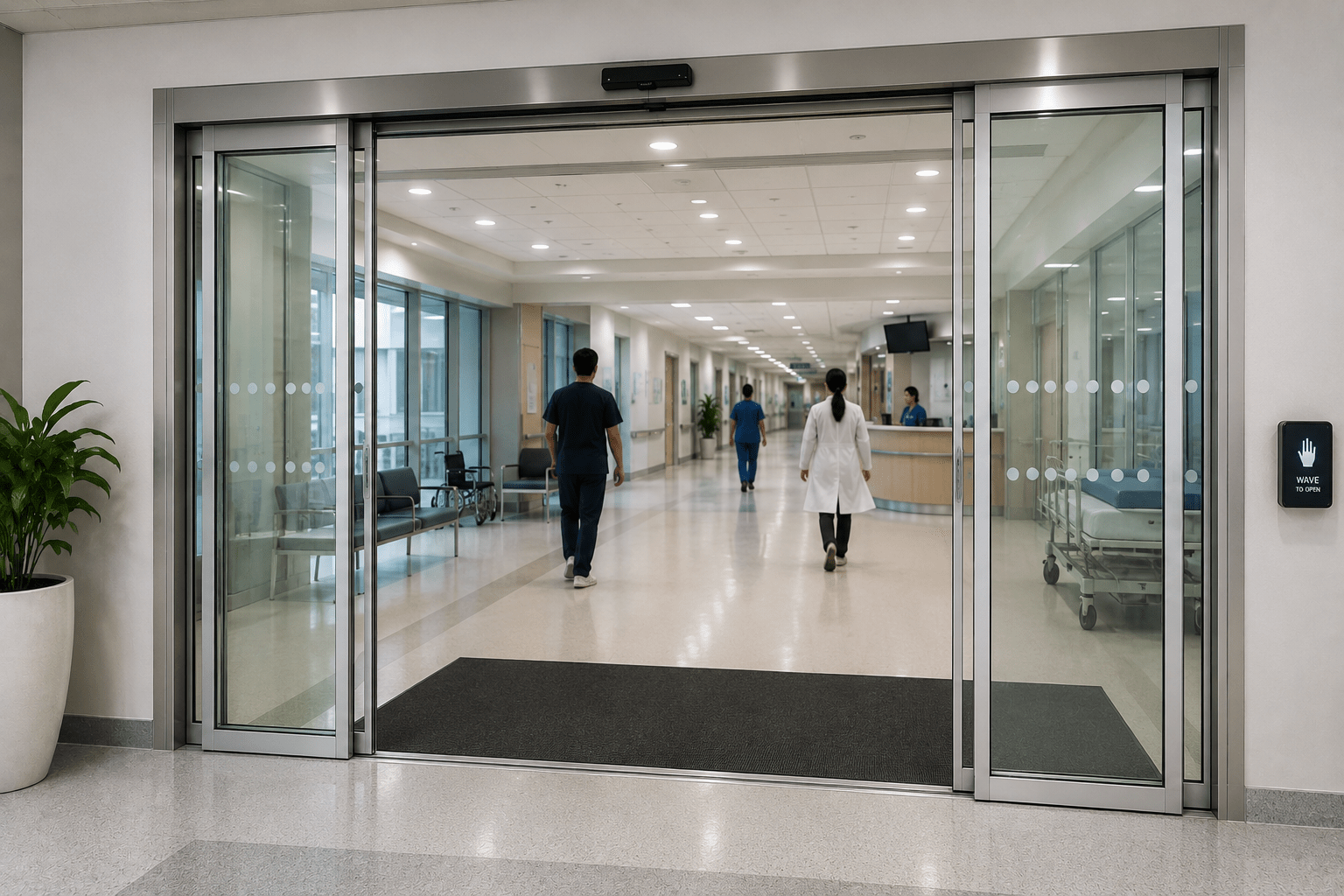
In the healthcare sector, automatic sliding doors are an integral part of the modern healthcare environment, providing access that is smooth, touchless, and efficient throughout healthcare facilities. These systems can be installed in high foot traffic areas like main entrances, emergency departments, operating zones, and corridors within the hospital to assist with patient flow, medical staff, visitors, hospital beds, wheelchairs, hygiene and accessibility standards.
The touchless operation of automatic sliding doors is one of the main benefits of these doors in healthcare facilities. These doors help to maintain infection control measures in sensitive medical environments by minimizing unnecessary physical contact with surfaces, either through the use of motion sensors, infrared detection systems or wave-to-open technology. This makes them very useful in hospitals, where cleanliness, safety, and efficiency are paramount.
Contemporary hospital sliding door systems are additionally intended for everyday use in challenging conditions. The use of advanced automation technology and intelligent motor systems enables doors to function seamlessly and reliably even during busy periods. Safety is a paramount concern, with numerous systems equipping them with features like presence sensors, anti-pinch protection, emergency battery backup, and obstacle detection systems to ensure safe operation for everyone.
Beyond their practical use, automatic sliding doors also help to optimize space and ensure a smooth flow of material, such as stretchers, wheelchairs, beds for transporting to and from the operating room and medical equipment. The stylish look of their architecture ensures that the overall design of the building is elegant and modern, aligning with the standards set for modern healthcare facilities.
MACE Gulf offers and installs cutting-edge automatic sliding door systems for healthcare projects in UAE and QATAR. Partnering with renowned entrance automation manufacturers, MACE provides hospital entrance solutions that are engineered to ensure reliability, hygiene, safety and longevity in contemporary healthcare facilities.
Swing and Folding Doors for Flexible Healthcare Spaces
In today’s healthcare landscape, where flexibility, security, and space optimization are paramount, swing and folding door systems are proving to be a key element in these solutions. Typical applications for these entrance solutions include hospital corridors, treatment rooms, cleanroom environments, restricted medical areas, staff areas, and any space that requires seamless movement and dependable control and performance throughout the day.
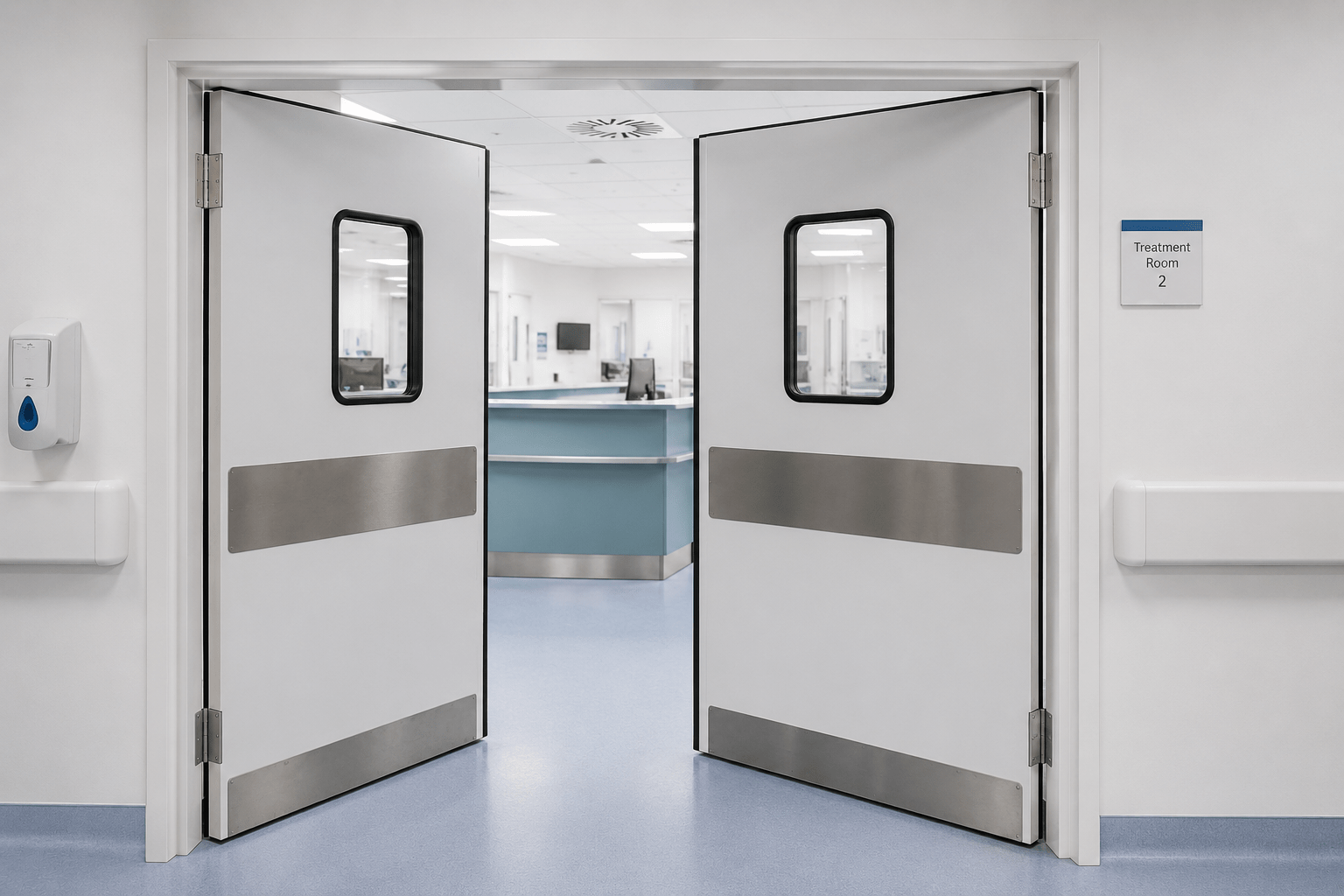
The hospital swing doors are designed for continuous traffic as well as durability and cleanliness. Many doors for medical use are made of stainless steel or other materials that resist challenging medical environments and are easy to clean. Wear protection strips, viewing windows and hand protection systems help minimize damage from patient beds, wheelchairs, medical trolleys and everyday use. Inset vision panels are also used to increase the transparency between rooms and corridors to assist the medical staffs to move around safely and efficiently in the busy areas.
The swing doors may be manually or automatically operated depending on the operation needs of the facility. Hospitals can reduce the risk of infection with automatic swing systems, and can make the hospital more accommodating to patients, staff and visitors. In healthcare settings, where seamless mobility and low-touch operations are paramount, these systems play a key role.
In healthcare settings, particularly where space constraints are an issue, folding door systems can also provide a practical solution. Folding doors do not need any space in the ceiling or on the sides of the door opening, unlike traditional entrance types, and are open and easy to use. Their streamlined design allows them to fit in narrower hospital corridors, in smaller departments and in internal hospital spaces that demand freedom of movement without sacrificing accessibility and functional efficiency.
Beyond their functional role, both swing doors and folding doors both have a contribution in the safety and architectural aesthetics of healthcare facilities. With the help of modern design, hospitals can keep their surroundings clean, professional, and orderly, and optimize traffic flow between departments. Door automation systems are reliable, too, and can minimize downtime while providing the speed that’s essential in healthcare settings.
Revolving Doors and Controlled Lobby Access
In today’s modern healthcare architecture, revolving doors have emerged as a crucial component, especially in large hospitals, medical centers, and high traffic healthcare settings, where efficient movement, energy conservation and smooth operations are paramount. In addition to their modern and stylish design, revolving doors play a crucial role in the efficient flow of people in and out of hospitals, which reduces the risk of congestion and delays, and ensures the environment remains orderly and sanitary.
The essential benefit that revolving doors provide in the hospital environment is that they provide for a better traffic flow without affecting access flow. Revolving doors can be used to provide multiple points of entry and exit at the same time, without opening and closing as an entrance or exit door, so that people can move in and out and not stall in front of each other. This is particularly useful in the highly populated hospital lobbies, outpatient facilities and in public spaces that are adjacent to emergency rooms where congestion control and efficient pedestrian flow are important.
Revolving doors also play an important role in the energy saving and indoor environment control of hospitals. Revolving doors can minimise the unwanted introduction of air between the inside and outside as the entrance is not completely open to the outside. This will aid in temperature management, minimize HVAC stress, and contribute to consistent year-round interior comfort and conditions in healthcare facilities. These systems are beneficial for both operation and sustainability in healthcare facilities where climate control and air quality play a crucial role.
Another major advantage is the control of access to the lobby and an enhanced level of security on the entrance area. Traffic flow in and around hospitals is high and it is crucial to control the entry into some sensitive and restricted areas. Of course, revolving doors slow down and sequence patient entry, aiding hospitals to have clear visibility and control over patient entry. Combined with access control solutions or security systems, or with reception management workflows, revolving doors can contribute to safer and more controlled healthcare environments while maintaining good accessibility and ease of use for visitors.
Apart from access control, revolving doors also function as a barrier and help to minimize the external noise and dust and other pollutants entering the building. This generates less noise and dirt at entrances, which enhances the patient and visitor experience. They also feature an enclosed design, which makes it even harder to gain unauthorized access than it would be with a conventional entrance system, providing yet another layer of protection for healthcare facilities.
Architecturally, revolving doors can help create a modern and professional atmosphere in the healthcare environment, which is expected in today’s world. The stylish design helps to provide a luxurious feel when entering the ward, and matches the modern and elegant look of hospitals and medical centres.
Speed Gates and Access Control for Secure Hospital Movement
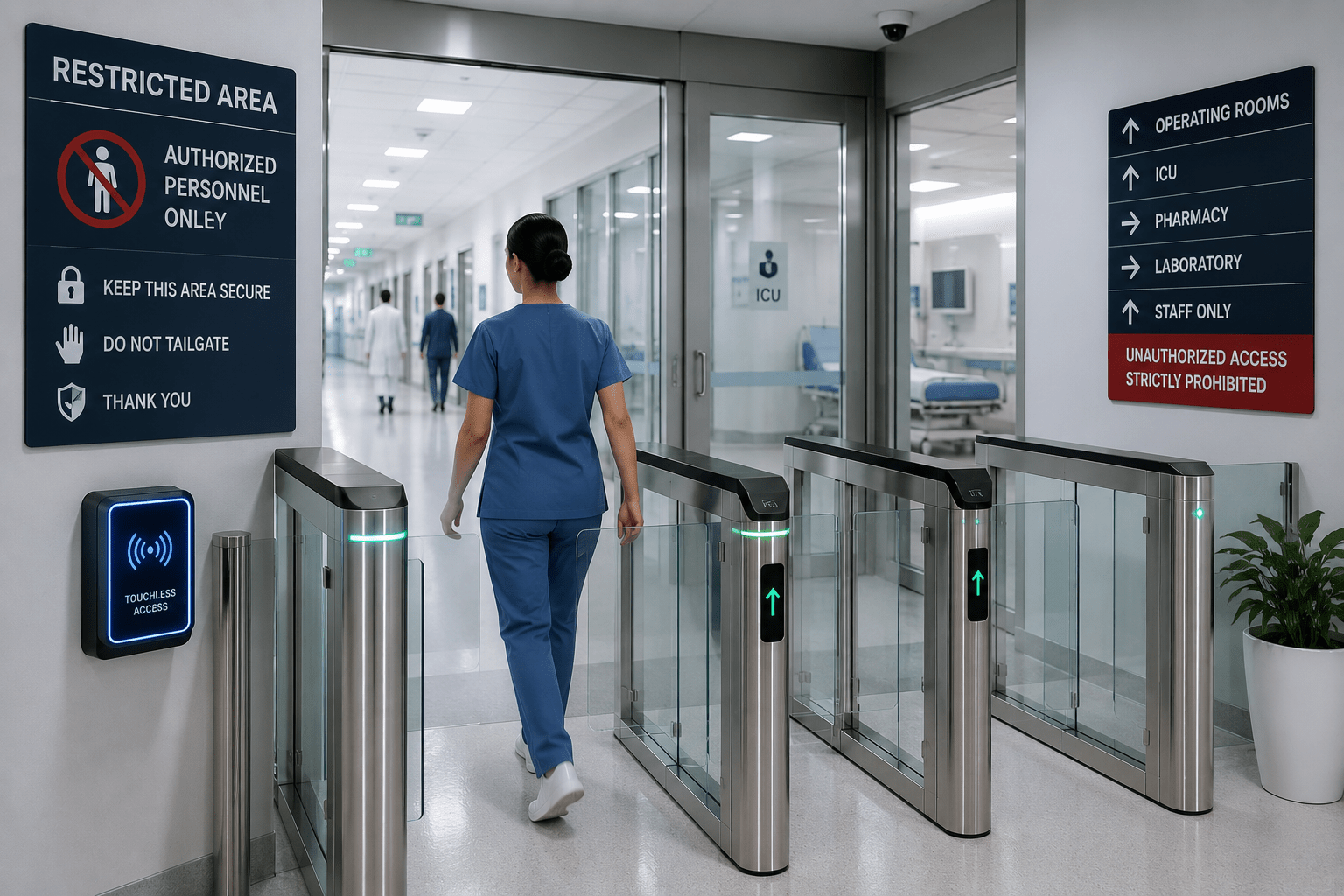
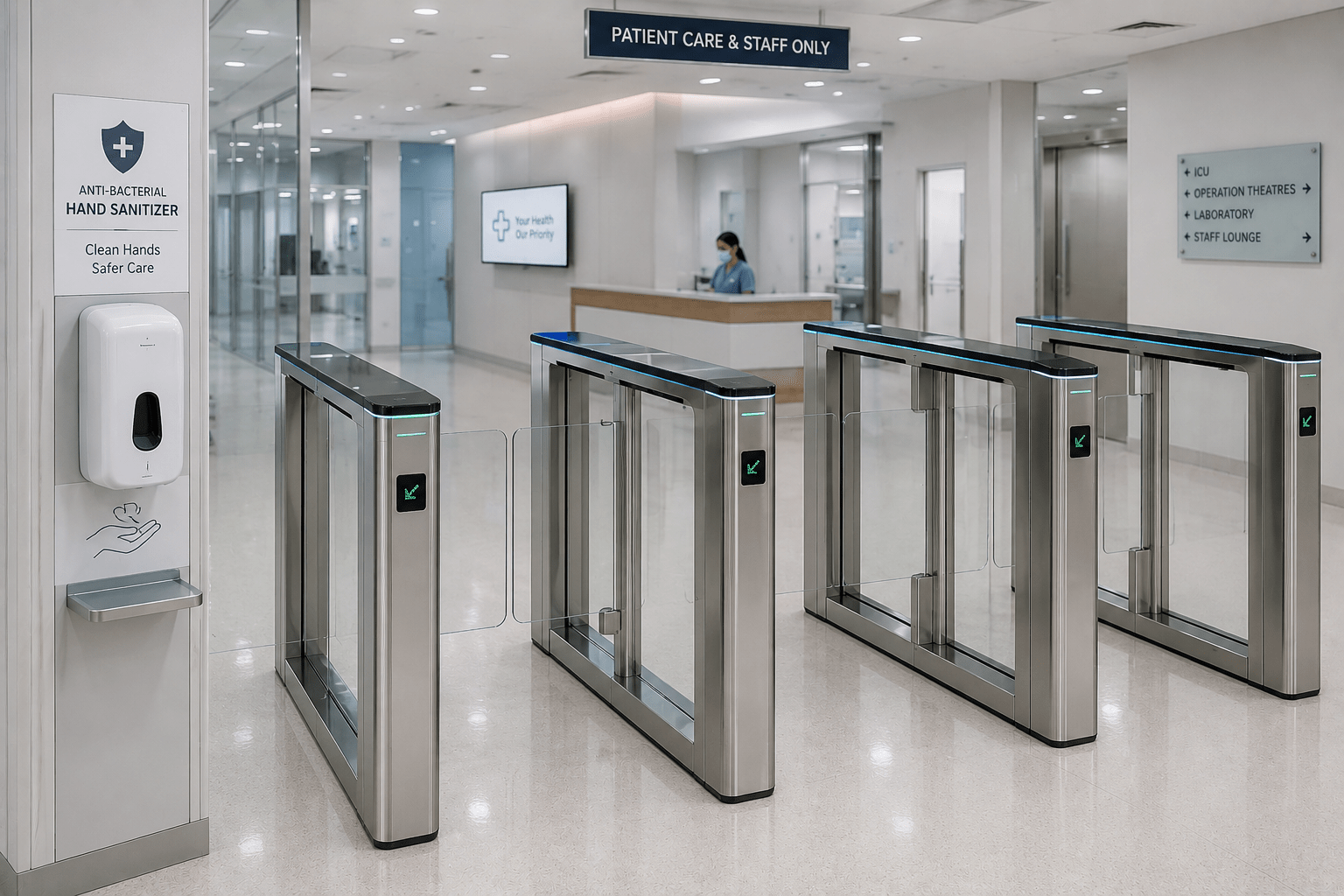
Today, speed gates have emerged as a vital component of modern healthcare facilities, providing a secure and efficient means of accessing and moving around within hospitals, while also ensuring a clean and professional entrance. They are compact, intelligent, and visually modern, allowing healthcare facilities to manage pedestrian traffic without causing congestion or hindering access for patients, visitors, and medical personnel.
Speed gates are frequently found in hospital staff-only corridors, administrative areas, laboratory spaces, operating rooms and other regulated areas where access must be controlled. Hospitals can connect with access control systems like ID cards, biometric systems, QR access or touchless authentication to ensure that those with access to rooms or areas are the right ones. This enhances the general security and enables healthcare facilities to keep their operations well organized and controlled.
New speed gates are engineered to be both functional and aesthetic. They are a sleek, compact design that seamlessly integrates with modern healthcare environments without adding a heavy or industrial look. They come in a variety of sizes, finishes, and configurations, allowing for customization to meet the specific design and operational needs of different healthcare facilities.
Intelligent sensors and auto barriers keep people moving forward and to a minimum during peak periods. This can improve the efficiency of healthcare facilities, as it allows for swift and efficient movement of patients and staff, while also providing a more comfortable experience for visitors and patients.
Today many sophisticated systems feature touchless security solutions which enable the hospital staff to navigate through the secure zones with minimal physical contact. This helps with up to date hygiene and infection control measures and enhances the convenience and accessibility of the facility.
Conclusion
The modern hospital entrance system isn’t restricted to just basic entry points. Automatic sliding doors, swing and folding doors, revolving entrance doors, and speed gates all help to make healthcare environments safer, more hygienic and more efficient. These solutions help ensure a smoother patient flow, facilitate touchless patient mobility, enhance access control, and beef up the overall patient experience in modern healthcare settings.
Frequently Asked Questions (FAQ)
Q: Why are automatic doors important in hospitals?
A: Automatic doors improve accessibility, reduce physical contact, support infection control measures, and help manage high pedestrian traffic efficiently within healthcare facilities.
Q: What types of entrance systems are commonly used in hospitals?
A: Common hospital entrance solutions include automatic sliding doors, swing doors, folding doors, revolving doors, and speed gates with integrated access control systems.
Q: How do touchless entrance systems improve hospital hygiene?
A: Touchless systems reduce contact with shared surfaces by using motion sensors, wave activation, or smartphone-based access technologies, helping support cleaner and safer healthcare environments.
Q: Why are speed gates used in healthcare facilities?
A: Speed gates help control movement in restricted areas such as staff corridors, laboratories, and administration zones while maintaining smooth and secure pedestrian flow.
Q: Can hospital entrance systems integrate with access control technologies?
A: Yes. Modern hospital entrance systems can integrate with access cards, biometric systems, QR authentication, and centralized access management platforms to improve security and operational control.
References
- Maxxess Systems. (2024, May 8). The Role of Access Control in Enhancing Healthcare Facility Safety. https://maxxess-systems.com/2024/05/the-role-of-access-control-in-enhancing-healthcare-facility-safety/
- Logit ME. (2021, August 19). Touch-Less Access Control for a Smart & Safe Hospital. https://www.logitme.com/touch-less-access-control-for-a-smart-safe-hospitals/
- Thermokor. (2024, May 14). Hinged, Sliding, Swing Doors for Hospitals, Cleanrooms, Manual and Automatic Versions. Doors and Windows for Cold Stores, Food Industry, Hospitals and Clean Rooms. https://thermokor.com/hinged-sliding-swing-doors-for-hospitals-cleanrooms-manual-and-automatic-versions/
- MACE Gulf. (2025, October 29). Why Revolving Doors Are the Future of Modern Architecture. MaceGulf. https://macegulf.com/blog/why-revolving-doors-are-the-future-of-modern-architecture/
- ASSA ABLOY. (n.d.). Speedgates. https://www.assaabloy.com/ae/en/solutions/products/automatic-doors/speed-gates-and-turnstiles/speed-gates/