



Table of Contents
The Role of Automatic Revolving Doors in the Middle East
The architectural design of buildings needs to go beyond merely impressing aesthetically in the heart of the Middle East where extreme temperatures dictate the weather and the jampacked urban life. Today, designers are focused on energy efficiency, comfort, and operating costs, making energy efficiency a priority. An automatic revolving door is one innovation that is becoming popular throughout the GCC region.
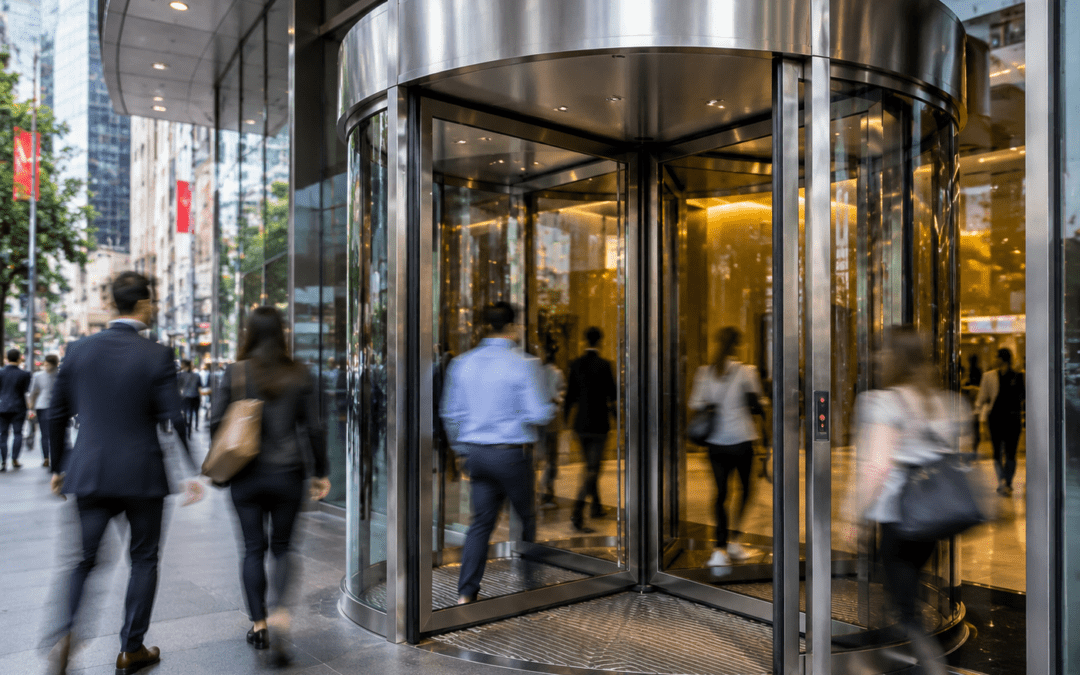
Previously used in luxury commercial buildings, hotels and large office towers, revolving doors are becoming increasingly common in shopping malls, hospitals and mixed use schemes across the cities of Dubai, Abu Dhabi and Doha. These doors are a novel solution to some of the harshest environmental challenges experienced in the region, such as extreme heat, direct sunlight and regular sandstorms. However, the benefit of automatic revolving doors goes beyond simply providing a grand entrance—but they are also a vital component of energy efficiency, comfort, and help diminish the strain on HVAC systems that are vital to ensuring indoor areas remain cool and comfortable.
In this blog, we will examine the energy-saving, comfort-creating and climate-protecting features of automatic revolving doors in the Middle East. However, are they as energy-efficient as they say or is it just marketing? Let’s explore how they work and why they might be beneficial to find out if they meet the expectations.
How Automatic Revolving Doors Work: The Basics of Energy-Saving Design
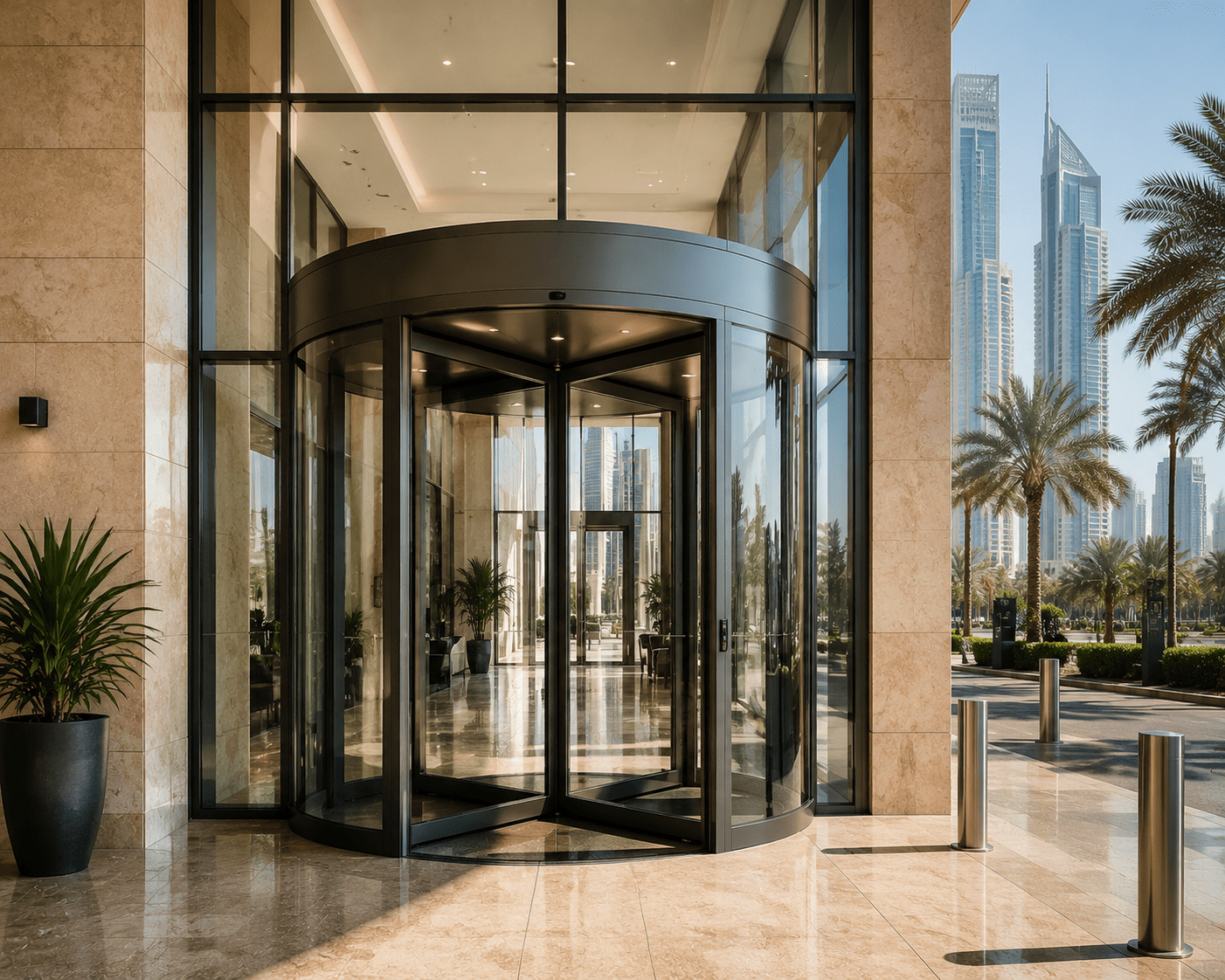
Automatic revolving doors aren’t only a contemporary design element, but they’re an effective way to keep indoor comfort and conserve energy. These doors are designed to seal the space between the outside and in, which helps to minimize air exchange between the two. The working principle of an automatic revolving door is really easy, but very effective. While standard swinging doors open to let air flow freely between the indoors and the outdoors, revolving doors have rotating sections that are in constant motion and permit people to move from one chamber to the next without forming an opening.
The main purpose of an automatic revolving door is to reduce the flow of hot or cold air from the inside and outside of the building. This is essential in places such as the Middle East, where outdoor temperatures can reach over 40°C, otherwise it could put a strain on the HVAC systems. Revolving doors will be installed to maintain the separation between the conditioned air from inside the building and the extreme temperature outside the building during hot months, which can save energy and cool the air.
Automatic revolving doors consist of a motorized mechanism that enables the door to rotate smoothly, a control unit processes the input from the sensors, and sensors detect the motion. The components of these systems are designed to be used many times over and are engineered to function together for a continuous, energy efficient barrier. The modern revolving door is fitted with an infrared or microwave sensor which senses the movement of people approaching the door, opening the door. The door closes automatically after the person has gone through it, keeping the inside and outside separated.
Additional benefits for energy conservation include automatic revolving doors which are able to reduce air changes at times of high use such as entry and exit. This feature is particularly useful in congested areas like shopping malls, office buildings, and hospitals. Revolving doors help control air flow and minimize energy loss, leading to savings on air conditioners and heating systems.
In addition to energy savings, automatic revolving doors also help in maintaining the internal environment of the building. They serve as dust, sand and a barrier against environmental pollution that can easily enter via traditional doors. This is particularly beneficial in areas where sandstorms and dust often occur, keeping the interior of the building free from dust and eliminating the need to spend more time on air filtration.
With these energy-saving attributes and the beauty and high-tech options that come with automatic revolving doors, it’s easy to see why they’re increasingly part of the contemporary building design. Whether you’re looking to save on energy use, enhance indoor air quality, or just for added convenience, these doors offer a smart choice to help make your space comfortable and energy-efficient. In both high-rise office buildings and luxury hotels, automatic revolving doors improve the building’s aesthetic and add to the overall energy efficiency.
To sum up, automatic revolving door isn’t just an entrance; it’s a vital element of an energy-efficient building. These doors can significantly reduce energy consumption, enhance indoor comfort, minimize HVAC system loads, and contribute to sustainability in modern building design. They provide tangible, long-term energy, comfort, and sustainability benefits in modern architecture by effectively managing the building’s internal environment, preventing heat loss or gain, and lowering the burden on HVAC systems.
The Real Energy-Saving Benefits of Revolving Doors
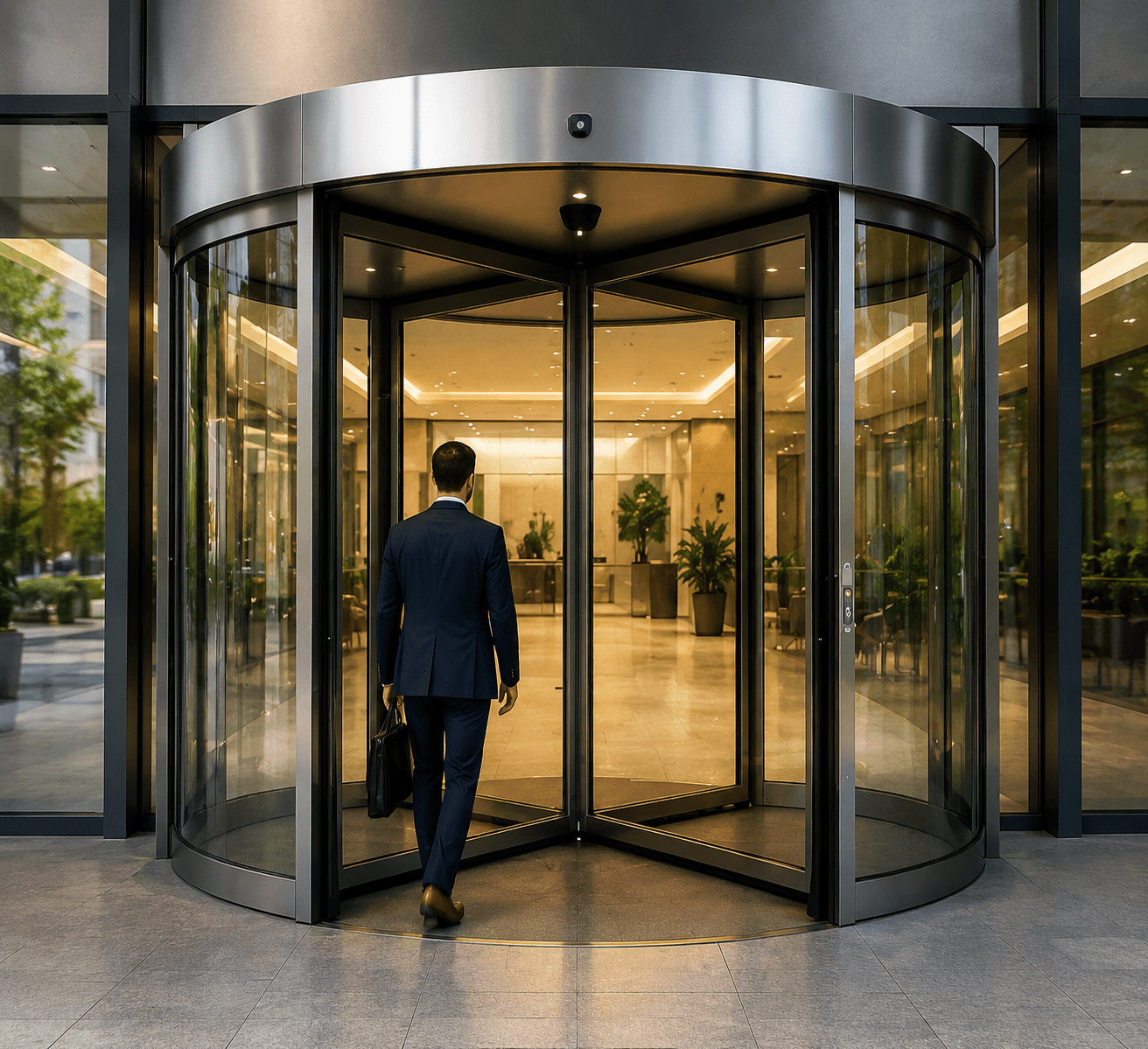
In buildings, especially in extreme climate areas such as the Middle East, automatic revolving doors can be the little extra effort needed to reduce energy consumption. Revolving doors open continuously between the inside and outside and do not generate the expansive flow of air that is generated by doors that swing open. This barrier helps to keep the conditioned air inside the room and hot air outside from entering the room, thus less load on the air conditioning systems.
A revolving door not only stops any temperature exchange from the outside, it also works to optimize the flow of air during traffic. These doors help prevent sudden air rushes around in busy areas such as shopping malls, office blocks and hospitals which increases energy costs. They control the flow of air to regulate the heating or cooling of the area, thereby preventing any unnecessary wasted energy and efficient application of the additional heat/cool.
One thing that is largely forgotten is their impact on indoor air quality. Revolving doors prevent dust, sand and other pollutants from entering the facility and reduce the strain on ventilation systems. This is not only useful for the protection of equipment but also for occupant comfort, which is achieved without additional energy.
In the end the use of automatic revolving doors comes with real and quantifiable energy benefits. Their ability to lower HVAC loads, save on utility expenses, and ensure long-term operational efficiency makes them a practical and eco-friendly investment for modern buildings. These doors are, in fact, a design touch and also an energy management device, subconsciously adding to sustainability in the meantime of every day comfort.
How Automatic Revolving Doors Enhance Building Performance
Most people are unaware that automatic revolving doors are low profile works of art in a way. Besides their beauty, they also help in regulating the temperature of a building. By sealing the building’s interior from the exterior by the movement of the revolving door, HVAC power is not required to be used for temperature regulation. Automatic revolving doors are often used by buildings that expect heavy foot traffic such as the hospital, airport, shopping centre, office tower, and more.
The revolving doors play an important role in improving the air quality indoors as they don’t let the dust particles and sands enter along with the outdoor pollutants gets disrupted. Particularly advantageous in areas that frequently experience sand storms. Modern revolving doors come equipped with sensors and motorised mechanisms that can accelerate the rotation depending on the volume of ingress and egress. Essentially achieving steady movement and ensuring nothing is lost in the process.
Revolving doors not only save energy but also provide a green benefit to the environment. The basic design of revolving doors guarantees no direct exchange of air between the interior and exterior environments. Beside that, the doors provide assurance that gravity doesn’t get disturbed inside the structure. If the doors did not exist, dust and other materials would become airborne.
Why the GCC Climate Matters: Ensuring Durability and Efficiency
The environment of the GCC is very harsh with extremely high temperatures, frequent sandstorms and high solar radiation, which poses a special challenge to building design and operation. With automatic revolving doors these factors are important for durability as well as energy conservation. Heat and dust exposed doors should be made with strong material and accurate mechanisms to ensure their smooth operation over time, and sensors and motors should be engineered to overcome the extremes without the need for frequent maintenance.
In addition to mechanical durability, energy efficiency is also in focus in the climate. Revolving doors provide a continuous shield against the outside heat, even during the hottest summer days, which can reach temperatures over 40°C, thus minimizing any unnecessary air exchange and helping to keep indoor areas comfortable, reducing energy consumption and contributing to sustainability and operational cost savings.
Furthermore, the dust and sand particles that tend to settle in the area also make revolving doors a good barrier to airborne pollutants. They keep small particles out of interiors, limiting the demand on the ventilation systems and safeguarding equipment, inhabitants and general indoor air quality.
Automatic Revolving doors are not merely a design decision but the need in the GCC climate. They should be designed, installed and maintained to withstand the extreme heat, sand and sun while providing long-lasting durability, energy efficiency and a clean, comfortable indoor environment.
Beyond Energy Efficiency: The Added Benefits of Revolving Doors
The benefits of automatic revolving doors are much more than the money they can save on energy. They add to the overall functionality, aesthetic and operational performance of modern buildings. The modern styling creates a bold, professional entrance that harmonizes with the building’s design. The diverse range of finishes and materials options allows building owners to customize the doors according to their brand, while keeping a consistent aesthetic.
In the real world, revolving doors simplify the way individuals move around in high-traffic areas like airports, malls and office buildings. They can be used to allow multiple people to enter or exit a specific area at the same time, which is helpful to ensure that the building can maintain a smooth flow of traffic and that visitors have a pleasant experience.
Such doors also help in maintaining the comfort and cleanliness inside. They serve as a protective barrier to the environment in respect to noise, dust and pollution. They also eliminate the noise of urban streets and the dust particles from stormy sand or dust in outdoor areas that may be an issue for ventilation and air filtration systems.
Today, there are a number of revolving doors available that have the ability to be remotely locked and reinforced with bullet proof or vandal proof glass, while still maintaining easy movement. Power assist helps keep all visitors – including those with mobility challenges – able to operate the doors.
Revolving doors can also help to maximize interior space. They can be used to provide energy efficient and comfortable space for vestibules and entry spaces, while still supporting other functions such as promotional displays, seating, or merchandise layouts, that would otherwise be lost in otherwise unused space.

Conclusion: Are Revolving Doors Right for Your Building?
Automatic revolving doors are a more than architectural feature—they’re an investment in comfort, efficiency and sustainability. These doors offer real-world advantages, especially in the harsh conditions of the GCC region, such as lower energy usage by minimizing air exchange, preventing dust and sand from entering the building, and facilitating seamless traffic flow in areas like airports, malls, and office buildings.
In addition to cutting energy costs, revolving doors provide extra security, noise reduction and space efficiency and support the visual appeal of a building. The incorporation of these doors in contemporary buildings can provide architects and building operators with a way to design an inviting and efficient environment that ensures the long-term sustainability and user satisfaction.
To conclude, revolving doors are an innovation, practical and sustainable solution that is not only vital for high traffic buildings in the GCC, but is a smart solution for any forward thinking development.
Frequently Asked Questions (FAQ)
Q: What are the main benefits of automatic revolving doors?
A: Automatic revolving doors offer multiple advantages, including energy savings, improved indoor air quality, smooth traffic flow, enhanced security, noise reduction, and a modern, professional appearance. They are ideal for high-traffic buildings looking to combine comfort, efficiency, and aesthetics.
Q: How do automatic revolving doors save energy?
A: These doors limit the exchange of indoor and outdoor air, keeping cooled or heated air inside. This reduces the load on HVAC systems, lowers energy consumption, and helps maintain a comfortable indoor climate, especially in hot or extreme weather regions like the GCC.
Q: Can automatic revolving doors protect against dust and sand?
A: Yes. Revolving doors act as a barrier against dust, sand, and outdoor pollutants. They prevent debris from entering the building, protecting interiors and reducing strain on air filtration systems.
Q: Do revolving doors help with noise reduction?
A: Yes. By creating a sealed entryway, they reduce street noise from traffic, construction, or crowds, contributing to a quieter and more comfortable indoor environment.
Q: Are automatic revolving doors secure?
A: Absolutely. Many models feature remote locking, reinforced glass, and options for bullet- or vandal-resistant panels. These features enhance perimeter security without compromising accessibility.
Q: How do revolving doors handle high foot traffic?
A: Revolving doors allow multiple people to enter or exit simultaneously, preventing congestion and bottlenecks. This ensures smooth pedestrian flow in busy areas like airports, malls, office buildings, and hospitals.
Q: What maintenance do automatic revolving doors require?
A: Routine maintenance is simple and minimal, typically involving lubrication, inspections, and occasional checks of mechanical components. With proper care, these doors remain durable and reliable over many years of use.
Q: Can revolving doors be customized for building design?
A: Yes. They come in a range of materials, finishes, and glass types. Architects can choose options that complement the building’s aesthetic while maintaining functionality, energy efficiency, and brand presence.
Q: Why should buildings invest in automatic revolving doors?
A: Beyond energy savings, revolving doors improve traffic flow, security, comfort, and interior cleanliness. They offer long-term value for high-traffic and modern commercial buildings, making them a smart and stylish investment.
References:
- Thompson, R. (2025, July 3). What is an Automatic Door. MF Services. https://www.mfservices.ie/what-is-an-automatic-door/
- Siragusa, E. (2024, December 2). 8 Key Benefits of Revolving Doors for Modern Buildings. Key Benefits of Revolving Doors. https://blog.boonedam.com/en-us/8-benefits-of-revolving-doors
- Revolving doors – Eyecatcher with energy saving potential | GEZE. (n.d.). https://www.geze.ae/en/discover/geze-insights/revolving-doors-eyecatcher-with-energy-saving-potential-1