




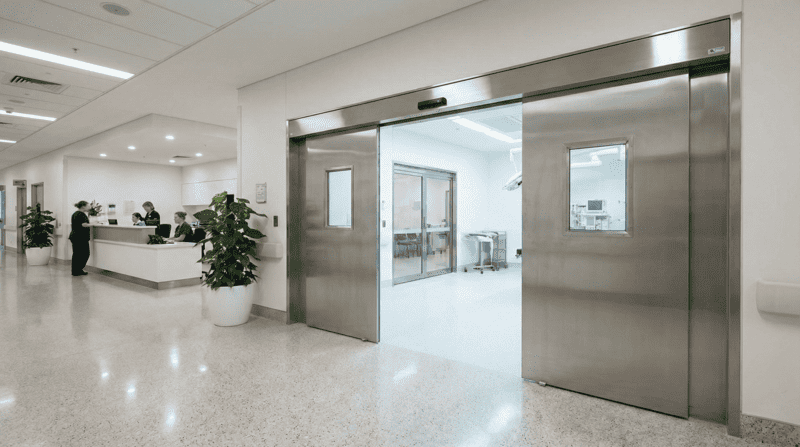
In hospitals, cleanrooms, laboratories, and pharmaceutical facilities, even the smallest air leak can lead to contamination, infection spread, and pressure imbalance. Automatic Hermetic Doors are specially engineered to create a fully airtight seal, ensuring complete control over hygiene, airflow, and safety in critical zones. These advanced door systems play a vital role in maintaining sterile environments, protecting patients, staff, and sensitive equipment from airborne threats. With growing global emphasis on infection control, cleanroom compliance, and energy efficiency, hermetic doors have become an essential part of modern healthcare and industrial infrastructure.
What Is an Automatic Hermetic Door
An automatic hermetic door is a motorized door system that seals tightly against the frame when closed. Unlike normal automatic doors, it uses a compression mechanism to eliminate air gaps. These doors operate through motion sensors, touch switches, access control systems, or hospital automation—allowing fully touchless and hygienic access.
How Automatic Hermetic Doors Work
Hermetic doors operate in two stages. First, the door slides or swings into the closed position. Then, a mechanical system presses the door firmly against the frame to create an airtight seal. When opening, the seal releases first, followed by smooth and silent movement, ensuring safe operation in medical environments.
Why Hermetic Sealing Is Essential
In critical environments, uncontrolled airflow can cause infection transmission, dust movement, pressure instability, and increased energy loss. Ordinary automatic doors cannot manage these risks. Hermetic doors maintain strict air separation between zones, protecting both people and sensitive processes.
Key Benefits of Automatic Hermetic Doors
Hermetic doors provide high-performance protection where it matters most:
- Airtight sealing for pressure-controlled rooms
- Touchless operation for improved hygiene
- Strong noise and odor insulation
- Reduced HVAC energy loss
- Heavy-duty performance for continuous use
- Advanced safety sensors for user protection
Main Applications of Hermetic Doors
In hospitals, hermetic doors are used in operating theatres, ICUs, isolation rooms, emergency wards, and radiology units to control infection and airflow. In pharmaceutical and cleanroom facilities, they prevent contamination and maintain GMP compliance. In laboratories and hygienic production zones, they protect sensitive environments and personnel.
Types of Automatic Hermetic Doors
Sliding hermetic doors are the most widely used, especially in operating rooms due to their space-saving design and smooth movement of hospital beds. Swing hermetic doors are used where sliding space is limited. Lead-lined hermetic doors are applied in radiology areas where radiation shielding is also required.
Materials and Construction
Hermetic doors are built using stainless steel, powder-coated steel, antibacterial HPL panels, and safety glass. These materials withstand aggressive cleaning chemicals and ensure long-term durability in high-usage environments.
Smart Integration and Safety
Modern hermetic doors integrate easily with access control systems, building management systems, fire alarms, nurse call systems, and interlock controls. This allows fully automated safety, security, and workflow management across medical and industrial facilities.
Maintenance and Reliability
To maintain airtight performance, hermetic doors require regular preventive maintenance. This includes motor inspection, seal adjustment, sensor calibration, and electrical safety checks. Routine servicing prevents failures and extends system life.
Conclusion
Automatic Hermetic Doors are essential for facilities that demand the highest standards of hygiene, pressure control, and safety. With airtight sealing, touchless operation, smart integration, and long-term durability, they provide reliable protection for hospitals, laboratories, and clean industries where failure is not an option.