



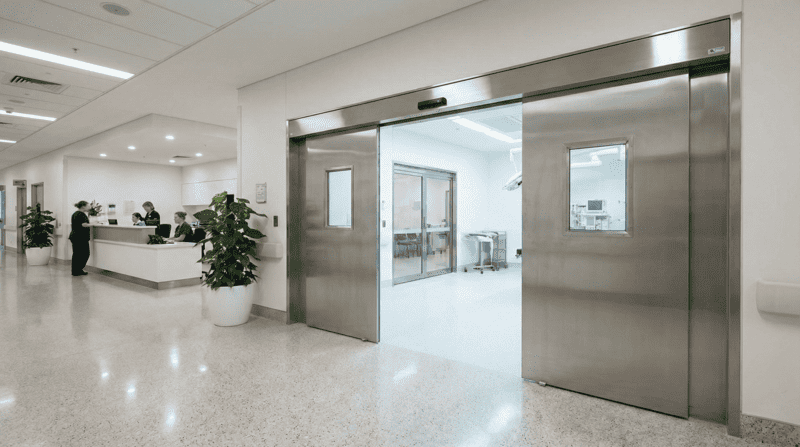
Hermetic doors are a critical component in environments where hygiene, pressure control, and safety must be maintained at the highest level. In hospitals, cleanrooms, laboratories, and pharmaceutical facilities, even the smallest air leak can lead to contamination, infection spread, and pressure imbalance. Automatic hermetic doors are specially engineered to create a fully airtight seal, ensuring complete control over airflow, cleanliness, and safety in critical zones. These advanced door systems play a vital role in maintaining sterile conditions, protecting patients, staff, and sensitive equipment from airborne threats. With increasing global focus on infection control, cleanroom compliance, and energy efficiency, hermetic doors have become an essential part of modern healthcare and industrial infrastructure.
What Is an Automatic Hermetic Door
An automatic hermetic door is a motorized door system that seals tightly against the frame when closed. Unlike standard automatic doors, it uses a compression mechanism that actively presses the door panel into the frame to eliminate air gaps. This ensures that the door remains airtight during operation and in the closed state. These doors are typically activated by motion sensors, touch‑free switches, access control systems, or integrated hospital automation platforms, enabling fully touchless and hygienic access without compromising on performance.
How Automatic Hermetic Doors Work
Hermetic doors operate in a two‑stage process. First, the door moves into the closed position either by sliding or swinging, depending on the configuration. Then, a mechanical or pneumatic system presses the door firmly against the frame, compressing the sealing elements to create an airtight barrier. When the door needs to open, the compression is released first, followed by smooth and silent movement. This controlled sequence minimizes air exchange during operation and ensures safe, quiet performance in sensitive medical environments.
Why Hermetic Sealing Is Essential
In critical environments such as operating theatres, isolation rooms, and clean production areas, uncontrolled airflow can allow infection transmission, dust movement, pressure instability, and excessive energy loss. Ordinary automatic doors cannot manage these risks effectively because they leave small gaps around the perimeter. Hermetic doors, on the other hand, maintain strict air separation between zones. This protects both people and sensitive processes by preventing cross‑contamination, stabilizing room pressure, and supporting the overall environmental control strategy.
Key Benefits of Automatic Hermetic Doors
Hermetic doors provide high‑performance protection where it matters most. They create an airtight seal for pressure‑controlled rooms, ensuring that clean, filtered air stays within the designated zone and contaminated air is contained. Touchless operation improves hygiene by reducing surface contact points, which is especially important in hospitals and pharmaceutical facilities. These doors also offer strong noise and odor insulation, helping to minimize disturbances in adjacent areas.
From an energy and operational perspective, hermetic doors reduce HVAC energy loss because well‑sealed rooms do not require constant over‑pressurization to compensate for air leakage. Their heavy‑duty construction supports continuous use in high‑traffic environments, while advanced safety sensors and obstacle‑detection systems protect users from pinching or trapping. Together, these benefits make hermetic doors a reliable solution for spaces that demand strict control over air quality and safety.
Main Applications of Hermetic Doors
In hospitals, hermetic doors are commonly installed in operating theatres, ICUs, isolation rooms, emergency wards, and radiology units. They help control infection spread and maintain the required pressure relationship between different zones. In pharmaceutical and cleanroom facilities, hermetic doors prevent contamination and support compliance with GMP and other regulatory standards. Laboratories and hygienic production areas also rely on these systems to protect sensitive environments and personnel from airborne particles and hazardous substances.
Types of Automatic Hermetic Doors
Sliding hermetic doors are the most widely used type, especially in operating rooms and clean areas where space efficiency and smooth movement of hospital beds are priorities. Swing hermetic doors are preferred when there is limited side space for sliding tracks, offering a compact solution that still delivers a full airtight seal. Lead‑lined hermetic doors are applied in radiology and imaging areas where additional radiation shielding is required along with hermetic sealing.
Materials and Construction
Hermetic doors are constructed using robust materials such as stainless steel, powder‑coated steel, antibacterial HPL panels, and safety glass. These materials resist harsh cleaning agents, frequent disinfection cycles, and heavy use, ensuring long‑term durability and easy maintenance. The door frames and seals are designed to withstand repeated compression without degradation, maintaining reliable hermetic performance over time.
Smart Integration and Safety
Modern hermetic doors integrate seamlessly with access control systems, building management systems, fire alarms, nurse call systems, and interlock controls. This allows for coordinated safety, security, and workflow management across medical and industrial facilities. For example, doors can be automatically locked during certain procedures, or interlocked so that only one door in a buffer zone can be open at a time, preserving pressure and hygiene standards.
Maintenance and Reliability
To maintain airtight performance, hermetic doors require regular preventive maintenance. This includes inspecting the drive system, adjusting the compression mechanism, checking and cleaning the seals, calibrating sensors, and verifying electrical safety. Routine servicing helps prevent unexpected failures, ensures consistent hermetic performance, and extends the overall lifespan of the system.
Conclusion
Automatic hermetic doors are essential for facilities that demand the highest standards of hygiene, pressure control, and safety. Their airtight sealing, touchless operation, smart integration capabilities, and long‑term durability make them a reliable solution for hospitals, laboratories, and clean industries where failure is not an option. By using hermetic doors, organizations can protect patients, staff, and sensitive processes while meeting strict regulatory and environmental requirements.