



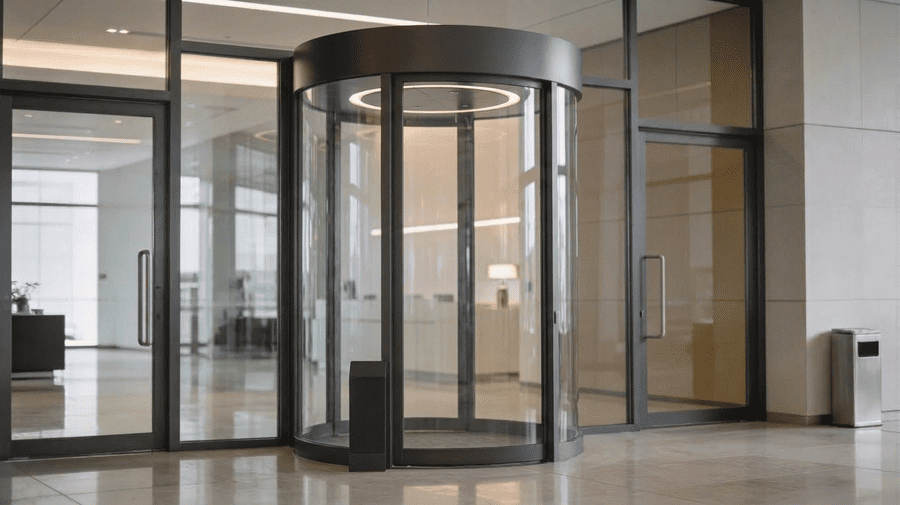
Why High‑Security Buildings Need Mantrap Doors
In today’s security landscape, protecting sensitive environments is no longer about deploying a single layer of protection. Corporate headquarters, data centers, and government facilities now require multi‑layered security strategies that combine physical access control with intelligent access control systems. One of the most effective components in such a strategy is the mantrap door, also known as a security portal or access control vestibule.
What Are Mantrap Doors and How Do They Work?
A mantrap door is a physical access control system composed of a small space with two interlocking doors, designed so that only one person can pass through at a time. This configuration prevents common security risks such as tailgating and piggybacking, where unauthorized individuals follow trusted users into secure zones.
By forcing a controlled entry sequence, mantrap doors ensure that access occurs only after positive identification, making them ideal for high‑security environments like government buildings, data centers, corporate campuses, and sensitive research facilities.
How Access Control Systems Enable Dual‑Factor Security
Modern access control systems manage who can enter a facility and under what conditions. These systems can include keycards, biometric scanners, PIN codes, mobile access, and two‑factor authentication (2FA) methods.
When integrated with a mantrap, these technologies create a dual‑factor authentication process:
- An employee first presents a credential (for example, an access card or mobile badge) to enter the first chamber.
- Once inside, the system requires a second factor—such as fingerprint scanning, facial recognition, or a PIN—before the second door opens.
This layered approach significantly raises the bar for unauthorized access, even if one credential is lost or compromised.
Improved Security and Audit‑Ready Access Logs
Beyond physical deterrence, the integration of mantrap doors with access control systems delivers detailed access logs and audit trails. Every entry attempt—successful or denied—is recorded, including who accessed the area, when they entered, and which authentication method was used.
This capability is especially important for:
- Government buildings subject to strict compliance requirements.
- Corporate facilities handling sensitive data or intellectual property.
- Data centers and financial institutions needing strong regulatory compliance.
Organizations gain both real‑time visibility and post‑incident forensics, strengthening overall security posture and accountability.
Custom Access Levels and Emergency Protocols
Modern security systems allow role‑based access control (RBAC) and time‑based permissions, so access can be tailored to individual responsibilities. For example:
- Employees may have access only during working hours.
- Maintenance staff and contractors can be granted limited‑time access or single‑use credentials.
In emergency scenarios, the system can be configured to:
- Automatically unlock mantrap doors for rapid evacuation.
- Maintain lockdown protocols in other zones while still allowing safe egress.
This balance of security and safety ensures that robust access control does not compromise life‑saving protocols.
Seamless Design and Architectural Integration
Today’s mantrap doors no longer look like industrial cages. With sleek finishes, glass panels, and compact footprints, they can blend into modern corporate lobbies, government entrances, and high‑end facilities without disrupting the aesthetic.
They are often marketed as security portals or high‑security entrances, emphasizing both functionality and visual appeal. This makes them suitable for environments where brand image and security standards must coexist.
Energy Efficiency and Environmental Control Benefits
Mantrap doors also contribute to energy‑efficient building operations. The sealed chamber between the two doors limits air exchange between interior and exterior environments, helping maintain stable temperature and humidity levels.
In regions with extreme climates—such as Dubai—this feature:
- Reduces HVAC load on building systems.
- Lowers energy consumption and operational costs over time while supporting green building goals.
Future‑Ready Security for Corporate and Government Facilities
Integrating mantrap doors with advanced access control and two‑factor authentication is more than a tactical upgrade; it is a strategic investment in:
- Physical security and cybersecurity convergence.
- Operational control, compliance, and risk management.
For organizations that prioritize safety, efficiency, and aesthetic design, the combination of mantrap security doors and smart access control systems offers a future‑ready security solution tailored to evolving threats and regulatory demands.