



The Art of Modern Entrance Design: Where Architecture Meets Security and Automation
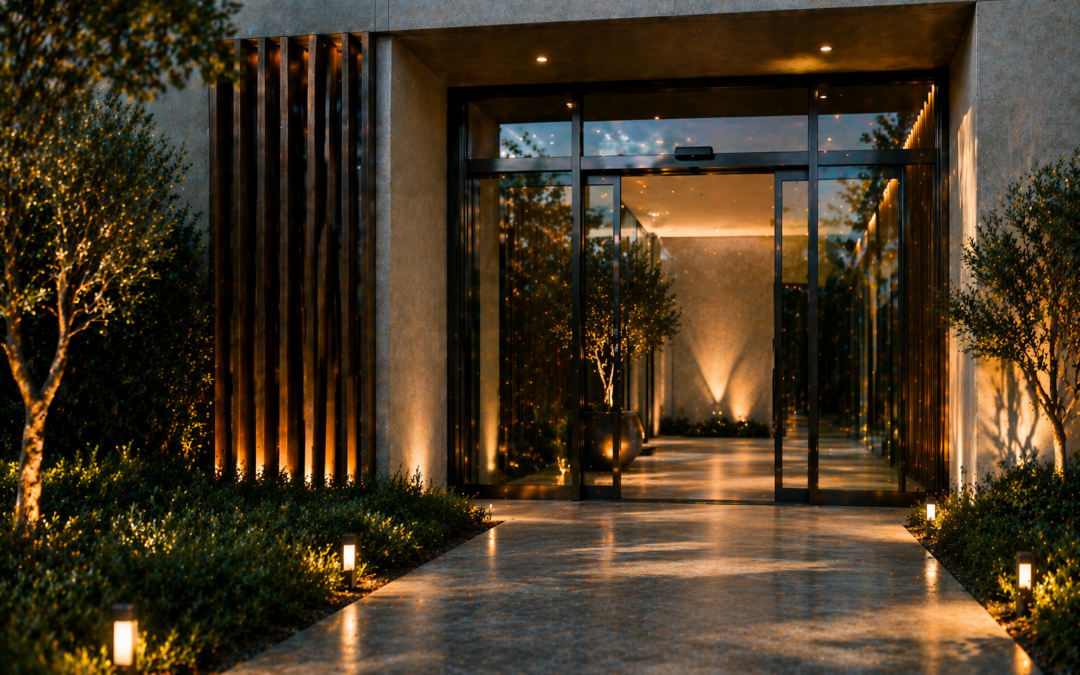
Making an Entrance. First impressions are not only restricted to social interaction- first impressions start as soon as one approaches a property. Entrance design is very important in the perception of a space even before one enters. Colour, texture, scale, and symmetry are some of the elements that are involved in this first perception which, to some extent, shapes expectations of what is ahead. Thoughtful entrance is not merely a way to access the location, but also a way to establish the overall impression of the style, quality, and the architectural intent of the building and direct the visual story of the spaces one enters.
Residential vs Commercial Entrance Design
The first point of contact between a building and its users is the entrance. Not only does it establish the visual identity of a space, but it also has a vital functional role, controlling access, movement, and shielding the interior against external influence. Entry design is reactive to quite different requirements when residential and commercial projects are compared.
The focus of the entrance in residential environments is on comfort, privacy and expression. This is aimed at a friendly introduction into the house at the same time incorporating the personality and lifestyle of the occupants. Things like door design, finishes and proportions are usually selected to improve the visual appeal and to harmonize with the rest of the architecture.
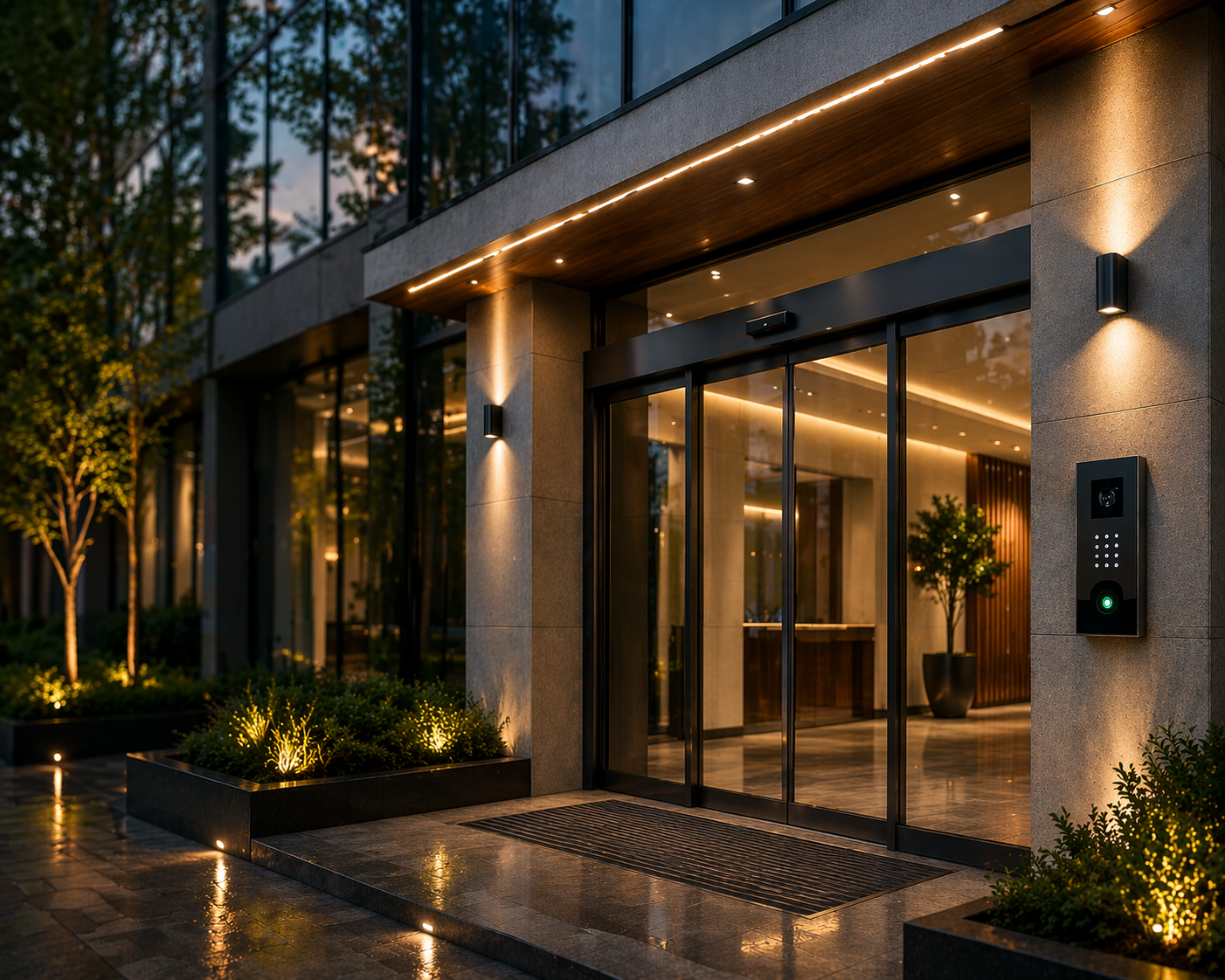
Commercial entrances, in contrast, are efficiency- and user flow-driven. They are constructed in such a way that they can handle increased traffic and provide controlled access. The visibility, accessibility and ease of movement is required, and in many cases, automated systems and well-defined points of entry are essential.
Finally, residential entrances are more concerned with experience and identity whereas commercial entrances are concerned with performance and functionality.
Materiality and Visual Identity
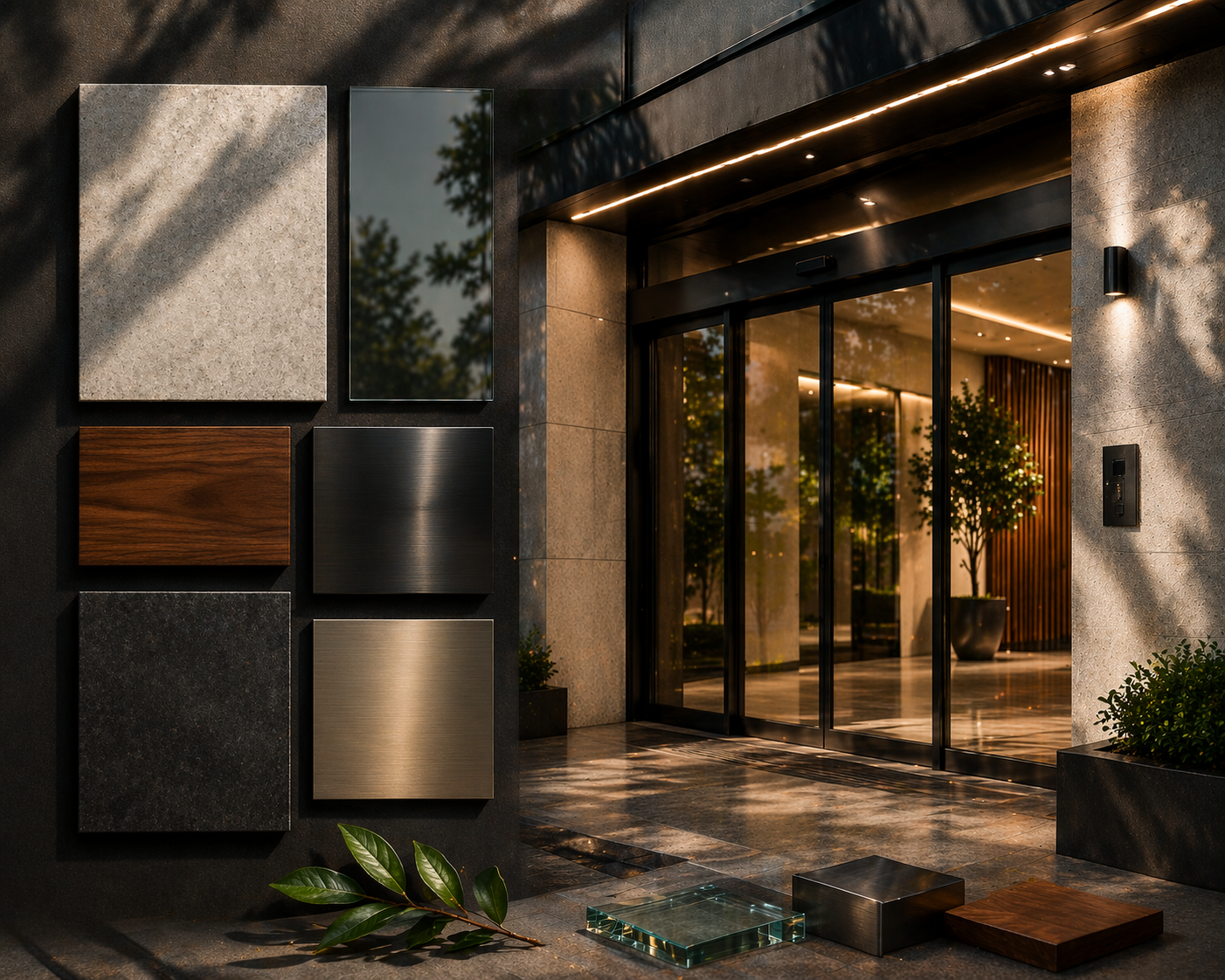
The choice of materials is important in determining the look and functionality of an entrance. The choice of materials used in residential conditions, i.e. wood finishes, glass and ornamental metals, are usually made to provide a warm, elegant, and customized appearance, as well as to be durable. These decisions are added to the general sense of feel and they assist the entrance to be aligned with the interior design.
On the contrary, commercial entrances are based on high-performance materials, like reinforced glass, structural metal and in-built automation. They are chosen to last through constant use, retain their looks throughout the years, and provide reliable performance in high-traffic situations, and strike a balance between durability, low maintenance, and long-term performance.
Movement and Flow Through the Entrance
Modern Entrance Designs play a much more vital role in high-use areas like airports, shopping malls, hospitals, and transport terminals, where it is not just the look of the building, but also an important element of the building. They serve as critical entry points that have to be operational at all times and be safe, efficient, and reliable. To design under such conditions a balance between performance and user experience has to be carefully considered.
Entrance systems are subjected to unremitting mechanical forces with thousands of cycles each day. All the components such as glazing, support structures, and machinery should be chosen to accommodate heavy usage with time. This contributes to durability as a key factor, so that a system is not rendered ineffective and aesthetically displeasing due to the constant wear and tear.
In spite of these requirements, the quality of design is not in vain. Modern entrance systems tend to use big glass panels to produce a clean and open appearance with more framing added where necessary to increase the strength without affecting the appearance. The design of the entrance is also instrumental in the effectiveness with which it handles the movement. The presence of multiple entry-ways or sliding doors is used to evenly spread foot traffic to reduce congestion and enhance environmental control through limiting the flow of indoor and outside air.
These environments revolve around automation in order to stay efficient. Automatic door systems are also used to allow hands-free access to enable individuals to pass in and out of entrances without disturbance. Operation on a sensor basis is what makes sure that the doors are responsive to the presence of a person and enhance their accessibility and the duration of waiting. Specifically, sliding and telescopic systems are best suited to busy locations, since they offer increased openings on top of maintaining a constant stream of users.
A combination of these factors, such as high-quality materials, efficient layout planning and smart automation results in an entrance that is both reliable and provides a smooth and efficient experience. These systems do not only enhance the performance of the operations but also help create a more comfortable and organised atmosphere to the users.
The Role of Automation in Modern Entrance Designs
Door automation has emerged as a very versatile option in the current buildings to deal with various daily issues of accessibility, hygiene and security. With the transformation of workplaces towards becoming more inclusive and efficient, automated entrance systems become even more significant in determining how individuals travel in and navigate a space.
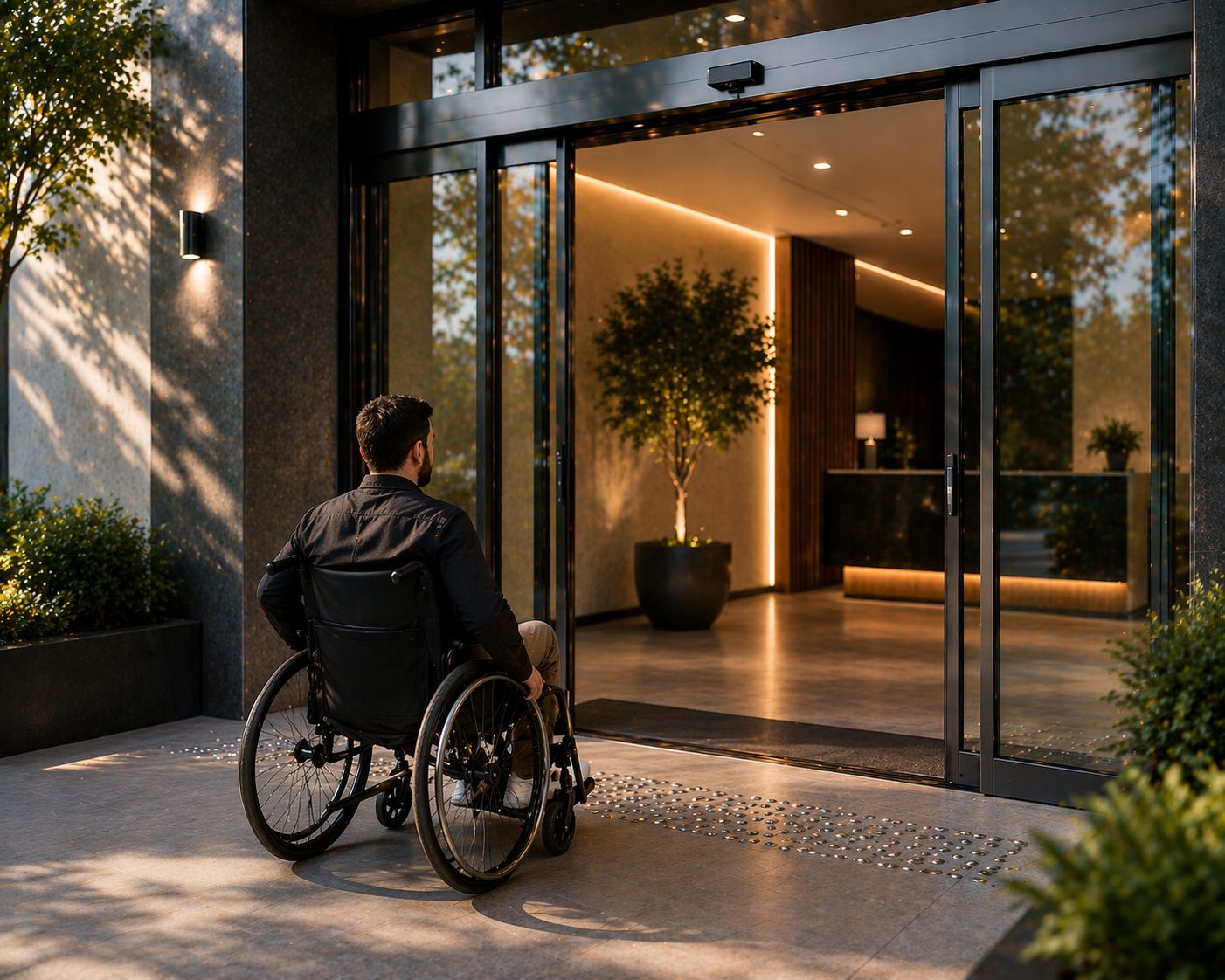
Accessibility is one of the main factors to consider in the design of buildings, especially those with lower mobility. Although there has been an improvement in the establishment of more inclusive settings, there are still obstacles, particularly in the navigation of access points. Automated doors are a viable solution because they do not require physical effort as users can move freely and safely around a building. They can be used in conjunction with access control systems to keep people safe and at the same time, not to take away the accessibility.
Besides accessibility, hygiene has emerged a significant concern in busy places. The most common touchpoints in any building are entrances, which heighten the chances of surface-based transmission. Automated doors are a truly touchless solution by removing the use of handles, push plates or manual interaction. Contactless activation and sensor-based systems contribute to the establishment of a safer and cleaner environment in which all users can use it.
Control and visibility in a building is also improved through automation. Automated doors can be linked to current access control systems to control the entry of individuals to certain locations and to give real-time data on the traffic of individuals. This does not only enhance security but also enhances effective management of buildings. Further enhanced solutions like the biometric integration enhance the access control by lessening the need of physical credentials and also minimizing the chances of unauthorized access.
In addition to these fundamental advantages, automated doors will help in the efficiency of overall operations. Timed locking, controlled opening codes, and programmable access codes of the entrances are features that enable the entrances to be intelligent during the day. This degree of control provides security to the buildings and at the same time adjusts to the changing patterns of utilization.
Types of Entrance Systems in Modern Architecture
The modern architecture incorporates a range of entrance systems, each one is aimed at meeting certain functional needs and adding to the overall appearance of a building. The choice of an entrance system is not entirely technical one, but it represents the compromise between the architectural purpose, user experience, and the degree of automation needed to work with the system successfully. With the growing user-orientation and technological sophistication of buildings, entrance systems are being created with a growing focus on both performance and elegant appearance at both residential and commercial developments.
Entrance systems are frequently selected in residential applications to increase convenience, accessibility, and generally improve the user experience. Sliding or swing doors that are automated are increasingly being found in high end homes and villas where they offer hands free operation with ease and a clean and modern look. It is also possible to combine these systems with smart home technologies to enable homeowners to control access, enhance security, and develop the continuation between the indoors and outdoors. Although pivot doors are generally hand operated, more highly developed designs can have concealed automation capabilities adding to the degree of comfort and usability.
In business and residential settings, automatic sliding doors have continued to be one of the most popular solutions as they can accommodate large numbers of people effectively. The flow of people is facilitated by their smooth continuous movement and a steady flow of people is ensured. The telescopic doors work best in the places where the most opening space is needed, like in a retail place or a transport center whereas the curved sliding doors will add a new architectural element that will give a different appearance as well as a performance.
Swing automatic doors offer a flexible solution in both industries and are particularly useful when there is a need to have controlled access, like in offices, medical institutions, and residential homes. They still maintain the familiarity of the conventional door movement but automate it to enhance accessibility and convenience.
In all these systems, automation is a key component in performance improvement. Entrances can be smart with sensors, control systems, and intercommunication with access systems, enhancing flow, access, and security. Finally, the great variety of available entrance solutions nowadays proves the possibility of integrating architecture, automation and design to make entrances highly functional and impressive.
Integrating Automation Without Compromising Design
Automatic doors have become a part of building fronts, and are used to serve both practical and aesthetic purposes in modern architecture. They can be used as the entrance points, but also enhance the overall appearance of a building, as they assist in the establishment of a balanced, professional, and friendly atmosphere. Automatic doors, when properly incorporated, contribute to the user experience and the space design by augmenting the architectural identity.
Design wise, automatic doors can also serve as a distinguishing characteristic of the doorway. The absence of framing and little hidden mechanisms in glass-based systems add to a clean and modern look that enables buildings to retain a sophisticated and modern look. Meanwhile, these systems enhance the convenience of movement as it is easy to move hands-free, especially in busy areas like offices, retail areas and in hospitality places. Through their facilitation of flow, they minimize congestions and enable a less smooth relationship between users and the space.
However, the success of automatic doors heavily relies on their location and incorporation into the facade. Their size, placement, and proportions need to be in harmony with the entire building to provide architectural harmony. The entrance must be placed in a manner that it seems to be the natural extension of the facade and not an addition to the structure, but still be visually balanced and more accessible.
Traffic flow is also a crucial factor to consider. Given the movement of people in a building, the designers can be able to know the right number and kind of doors needed. Where there is a lot of traffic, a larger opening or having more entry points may be used as a way of spreading the movement to minimize bottlenecks and maintain the same level of performance during peak traffic. Strategic positioning will also enable the utilization of available space better, especially in tight or narrow entranceways, where accessibility needs to be maximized without jeopardizing design.
Automatic doors may be placed in different places, as per the structure of a building and its requirements in use. The primary entrance that usually is in the lobby is the main point of entry and should be able to support the greatest number of users. Secondary access, like staff or personal access, are used to control circulation by dividing groups of users. Moreover, automated doors are frequently employed in the building itself, linking lobbies to corridors or internal areas, allowing a seamless transition, but keeping the language of design consistent across the space.
Besides design and placement, technical considerations are vital in long-term performance. The choice of the type of door to use, be it sliding, swing, or telescopic, will be determined by the space and the functionality of the project. The use of motion sensors and accurate control mechanisms can be considered as safety features that guarantee good functioning and reduce risks especially in crowded areas. More so, the selection of materials should be in harmony with the facade and the use of glass, aluminum, and other finishes should be well read and finished to ensure that the facade is coherent and of high quality.
In the end, the key to successful implementation of automatic doors is to strike a balance between design, performance and user requirement. These systems can increase both efficiency and accessibility, as well as help to create a coherent architectural expression, strengthening the entrance as a functional aspect of the building and a significant visual one.
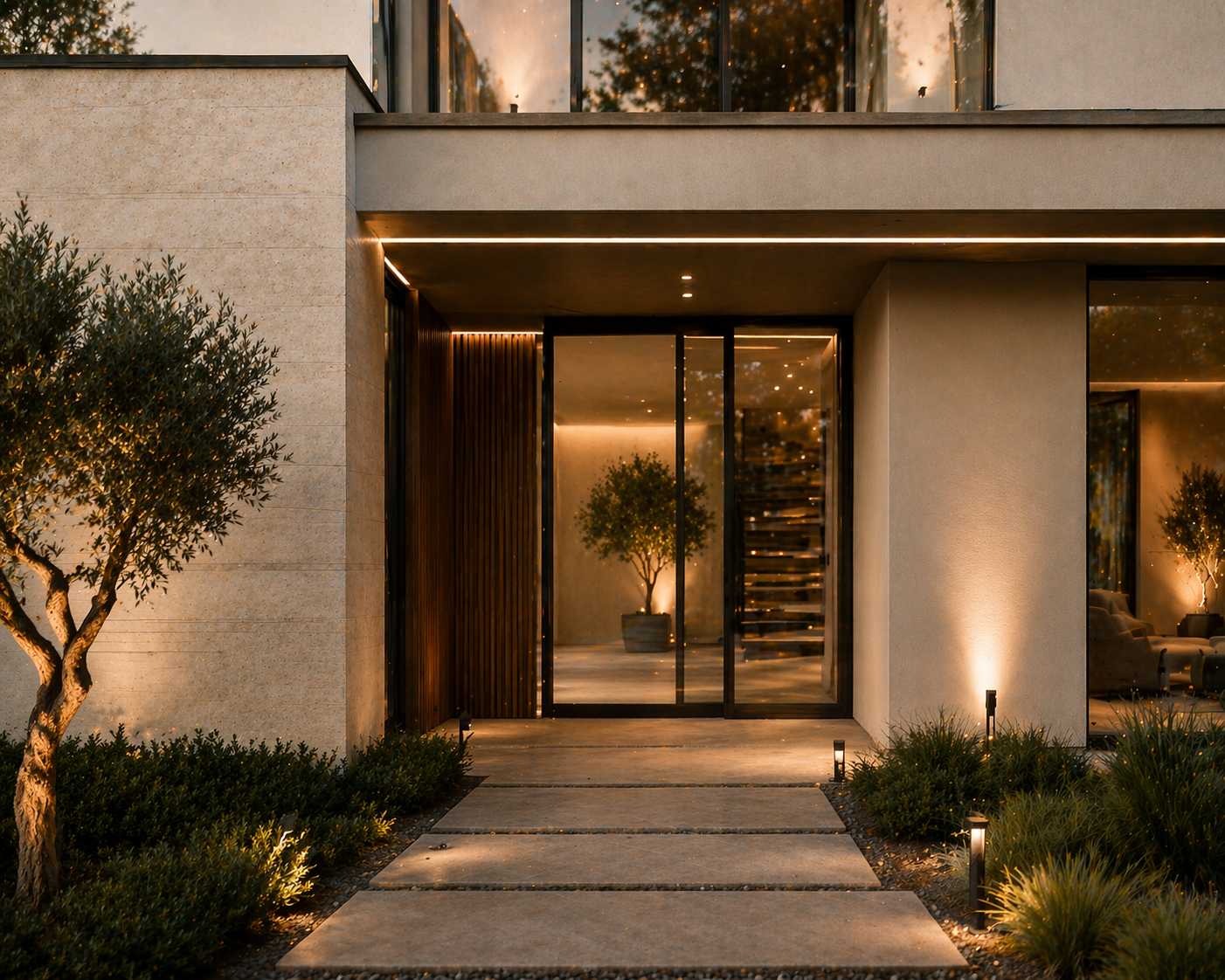
Efficiency and Sustainability in Modern Entrance Design
With buildings being designed to comply with more stringent energy requirements, better accessibility needs, and higher expectations placed on hygiene, these systems must provide much more than the basic opening and closing services. The present-day automatic doors are modeled in such a way that they can play an active role in the overall efficiency, comfort and sustainability strategy of a building.
Improvement in energy performance is one of the crucial areas. Entrances have traditionally been considered as one of the most susceptible areas to heat exchange, especially when the building has a significant amount of glazed areas. To overcome this, the latest automatic door systems tend to use insulated forms of glazing like double or triple glass panels, and low-emissivity (Low-E) coats. These technologies assist in controlling the internal temperatures: by minimising heat loss in lower temperatures and minimising the sun gain in warmer temperatures- this is particularly a consideration in areas where temperatures are extremely hot.
Besides substantial material enhancements, sensor technology has become much smarter. Traditional systems can react to any movement around it which leads to unwanted door cycles and a waste of power. Conversely, sophisticated sensors can now tell when there is incidental motion and when the user is actually trying to use the device. These systems can ensure the internal climate conditions not only by adjusting the areas of detection but also minimizing unproductive activations, thereby minimizing mechanical wear and leading to a longer service life of the door parts. Presence detects also increase security as the doors should not be closed when the users are outside the threshold.
Air management solutions can also be incorporated to achieve environmental control. When placed over entry points, air curtains form an impermeable barrier that restricts air between the indoor and outdoor aspects. Although they are not a full replacement of the vestibule systems, they are very useful in enhancing thermal performance, minimizing the load on the HVAC systems and ensuring comfort of occupants, especially in high-traffic areas.
In addition to operational effectiveness, sustainability of modern entrance design also spreads to the choice of material and lifecycle. Aluminum and similar materials are very popular because of their high strength, durability, and recyclability that enable them to have less impact on the environment in the long run. Likewise, the technological progress in glass production has resulted in more energy-saving production and higher recycling rates. Finishing systems are also enhanced and low-VOC finishes are a way of ensuring the indoor air quality is maintained especially in sensitive areas like healthcare and educational institutions.
In the future, it is possible that the role of automatic door systems will grow even further as buildings may become more connected and data-driven. It is now possible to connect smart operators to building management systems to allow real-time monitoring, optimizing performance, and predictive maintenance. This does not only help improve operational efficiency but also works towards the long-term sustainability goals through less energy waste and less downtime.
Finally, the contemporary automatic door systems are a blend of technology, design and environmental responsibility. Their integration of high-tech materials, smart technologies, and energy-saving characteristics will help create entrances that are not only efficient and safe but also in line with the needs of sustainable and future-oriented buildings as a whole.
Conclusion
Modern entrance design now transcends the realm of aesthetics and incorporates architecture, security, and automation to design spaces that are not only functional but also aesthetically compelling. Entrances are very important in creating user experiences and building performances, based on the material choice, traffic flow and high performance automation systems. By integrating smart technologies with thoughtful design, modern entrance solutions enhance accessibility, efficiency, and overall architectural identity.
Frequently Asked Questions (FAQ)
Q: What is modern entrance design?
A: It is the integration of architecture, automation, and security to create entrances that are both visually cohesive and functionally efficient.
Q: Are automatic doors suitable for residential projects?
A: Yes. Automatic sliding or swing doors can be integrated into villas and high-end homes to enhance convenience, accessibility, and smart home functionality.
Q: Which entrance system is best for high-traffic environments?
A: Automatic sliding or telescopic doors are typically preferred, as they allow continuous flow and maximize opening width.
Q: How do automatic doors improve energy efficiency?
A: By reducing unnecessary opening cycles and closing automatically, they help minimize air exchange and reduce HVAC load.
Q: Can automatic doors be integrated with access control systems?
A: Yes. Automatic doors can be connected to card readers, sensors, or biometric systems to regulate and monitor access.
Q: How can modern entrance design maintain both security and aesthetics?
A: Through the use of concealed systems, minimal hardware, and integrated access control that preserves a clean architectural appearance.
Q: What factors determine the choice of entrance system?
A: Key factors include traffic volume, available space, building type, security requirements, and desired architectural style.
References
- Kassavello Blog. (2021). Making an Entrance – The Art of a Well-Designed Hallway. https://www.kassavello.com/blog/making-an-entrance-the-art-of-a-well-designed-hallway/
- Mannlee CW. (2025). Commercial vs Residential Facade: Key Differences 2026. https://www.mannleecw.com/commercial-vs-residential-facade/
- Continental Materials. (n.d.). Commercial vs. Residential Materials – What’s the Difference? https://www.continentalmaterials.com/commercial-vs-residential-materials-whats-the-difference/
- Open Entrances. (2025). The Challenges and Solutions for Entrances in High-Traffic Public Spaces. https://www.openentrances.co.uk/blog/the-challenges-and-solutions-for-entrances-in-high-traffic-public-spaces/
- CDVI UK. (2024). 3 Ways Door Automation Improves Your Workplace and Supports Your Employees. https://www.cdvi.co.uk/ways-door-automation-improves-your-workplace/
- CDVI UK. (2026). Types of Door Automation Systems: A Comprehensive Guide. https://www.cdvi.co.uk/blog-types-of-door-automation-systems-a-comprehensive-guide/
- Falcon Autodoor. (2026). How to Properly Arrange Automatic Doors in Building Facade Design. https://falconautodoor.com/en/how-to-properly-arrange-automatic-doors-in-building-facade-design
- Automagic Doors Ltd. (2026). Energy-Efficient Automatic Door Operators for Sustainable UK Buildings (2026 Guide). https://www.doorparts.co.uk/blogs/news/sustainable-and-smart-automatic-door-operators-the-energy-efficient-future-of-entrances-uk-2026