




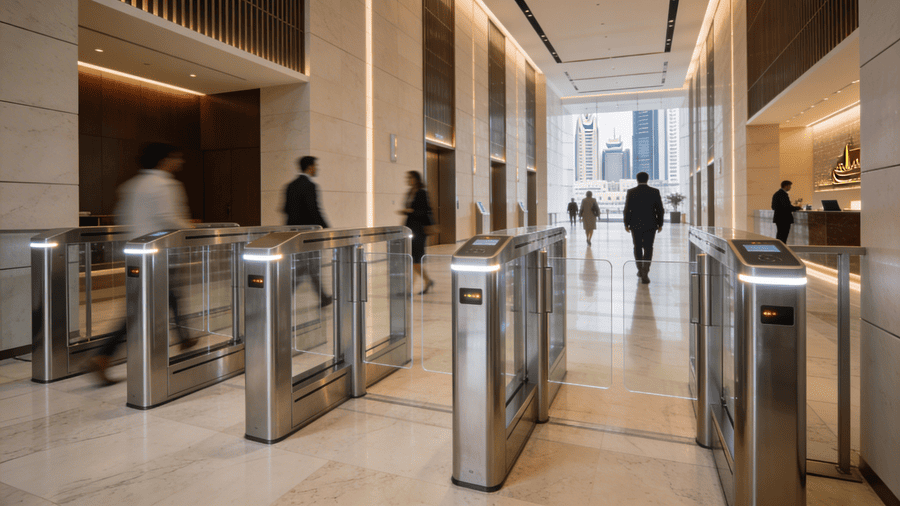
In a city as dynamic as Dubai, managing pedestrian flow efficiently is a daily reality. Commercial towers, metro-connected offices, residential complexes, and mixed-use developments all face the same question: how do you control access without slowing people down?
The answer increasingly lies in smart turnstiles and speed gates—systems designed to secure entrances while keeping people moving.
The Challenge in High-Traffic Buildings
Modern buildings can experience thousands of entries and exits each day. When access control is weak, outdated, or poorly planned, the impact shows up immediately:
-
Security gaps at peak hours, including tailgating and unauthorized entry
-
Congestion that spills into lobbies and lift areas
-
A frustrating first impression for tenants and visitors
-
Higher operational load on security teams and front desk staff
Across Dubai’s busiest business districts and high-occupancy developments in Abu Dhabi and Sharjah, the goal is the same: high throughput with reliable control.
What Makes Turnstiles “Smart”?
Traditional turnstiles were mechanical barriers. Today’s smart pedestrian gates integrate with digital building infrastructure, giving facility teams more control and better visibility.
Common capabilities include:
-
RFID card access for employees and residents
-
Mobile credentials and QR codes for guests and contractors
-
Facial recognition integration where appropriate (with proper privacy planning)
-
Real-time occupancy tracking for operations and compliance reporting
-
Emergency override modes for life-safety scenarios
This shifts access control from a static checkpoint into a responsive system that can adapt by time of day, user type, and risk level.
Speed Gates: Premium Security Without Intimidation
Speed gates are especially popular in Grade-A office towers, corporate headquarters, and premium lobbies where design matters. Instead of a rotating arm, speed gates typically use glass panels that open and close quickly once authorization is confirmed.
Why developers and facility managers choose speed gates:
-
Faster throughput than many traditional turnstiles
-
A sleek, modern look that fits premium interiors
-
A more welcoming feel for tenants and visitors
-
Strong anti-tailgating performance when configured correctly
For high-end environments, the balance between security and hospitality is critical. Speed gates help maintain that balance by making control feel effortless.
Improving User Experience Without Weakening Security
No tenant wants queues at 9:00 AM, and no building manager wants daily congestion complaints. Smart systems reduce friction by making access faster and more predictable.
Practical ways smart turnstiles and speed gates improve flow:
-
Instant credential processing, reducing hesitation at the lane
-
Mobile-based access options that eliminate forgotten cards
-
Visitor pre-registration so guests scan and pass quickly
-
Clear lane logic, such as separate lines for staff and visitors
A smooth entrance is not only a comfort feature—it also supports security. When people are not rushing or crowding, it is easier to spot abnormal behavior and enforce rules consistently.
Integration with Building Management Systems
The biggest performance gains come from integration. Smart turnstiles and speed gates become far more valuable when they connect to the systems that already run the building.
Typical integrations include:
-
Access control databases for centralized user management
-
Fire alarm and emergency systems for automatic unlocking during evacuations
-
Visitor management platforms for seamless guest check-in
-
Elevator destination control to direct authorized users to specific floors
-
Building analytics dashboards for real-time monitoring
This level of integration transforms access control from an isolated function into a core component of building intelligence.
Data-Driven Security and Operations
Modern smart turnstile systems provide valuable operational insights that go beyond simple entry logging.
Key analytics include:
-
Peak traffic hours and flow patterns
-
Entry trends by department, tenant, or visitor type
-
Access violation attempts and tailgating events
-
Real-time occupancy data for compliance and space planning
These insights allow facility managers to optimize staffing schedules, adjust security protocols, and make informed decisions about lobby layouts and lane configurations.
Compliance and Safety Standards
Smart access systems must meet local safety requirements, particularly around emergency egress. In the UAE, building systems are expected to align with international life-safety standards, which typically require that turnstiles and speed gates automatically unlock or retract during fire alarms or power failures.
Proper commissioning ensures that:
-
Emergency modes are tested and verified
-
Anti-tailgating sensitivity is calibrated appropriately
-
Lane widths comply with accessibility requirements
-
Integration points with fire and BMS systems function correctly
These considerations protect both users and building operators while maintaining operational reliability.
The Future of Access Control in Dubai
As Dubai continues to position itself as a global smart city, access control systems must evolve accordingly. Buildings are no longer static structures—they are connected ecosystems that respond dynamically to occupancy, security events, and user behavior.
Smart turnstiles and speed gates represent a shift toward intelligent infrastructure that supports both security and seamless movement. The best systems work invisibly: users move through quickly, security teams maintain full oversight, and facility managers gain actionable data.
In high-traffic environments, efficiency is not optional. It is essential. The question is no longer whether to upgrade access control, but how quickly your building can adapt to meet the expectations of a smarter, faster city.