



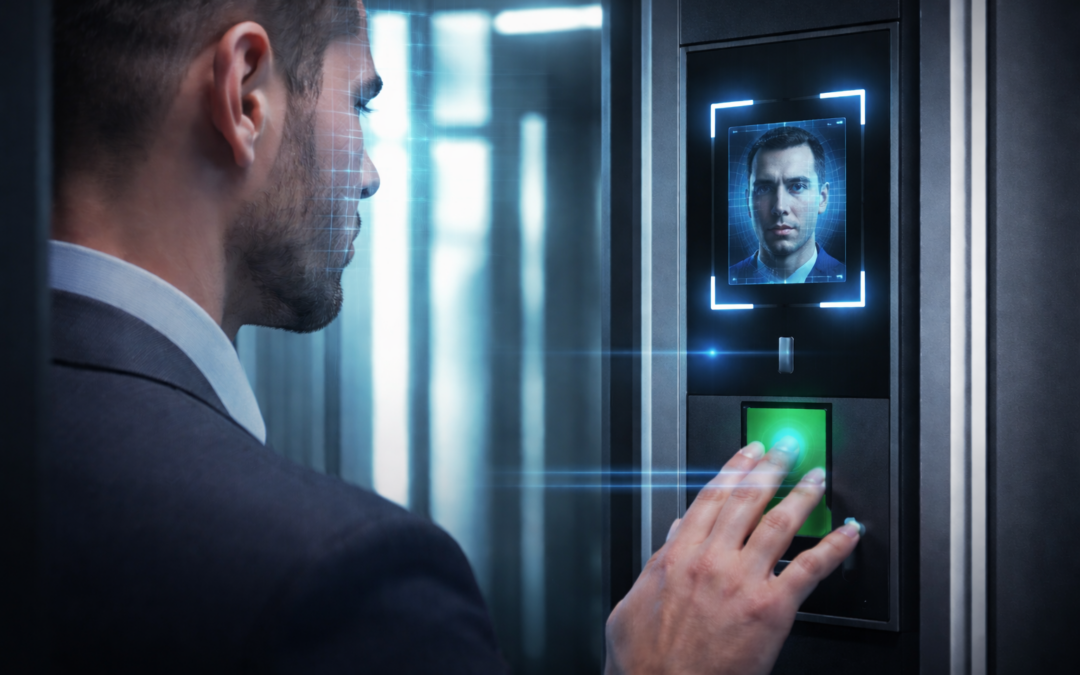
Elements of High-Performance Mantrap Access Systems: The Engineering Blueprint for 2026
In the modern facility management landscape, the entrance is no longer just a physical point of entry; it is a high-stakes “handshake” between advanced architectural hardware and sophisticated digital logic. As corporate and government facilities move toward Zero-Trust Physical Security, the traditional door is being replaced by the Integrated Mantrap System.
A mantrap—often called a security vestibule or access control portal—is a specialized entry system consisting of two interlocking doors. The fundamental rule is simple: Door A must be closed and locked before Door B can open. However, executing this in a high-traffic environment while maintaining life safety standards and user convenience is a complex engineering challenge.
At our core, we view the mantrap as a unified ecosystem where precision-engineered automatic doors meet advanced access control logic. In this comprehensive guide, we explore the 8 essential elements required to design, implement, and maintain an integrated mantrap system that provides unparalleled security while maintaining the fluid movement of a modern corporate environment.
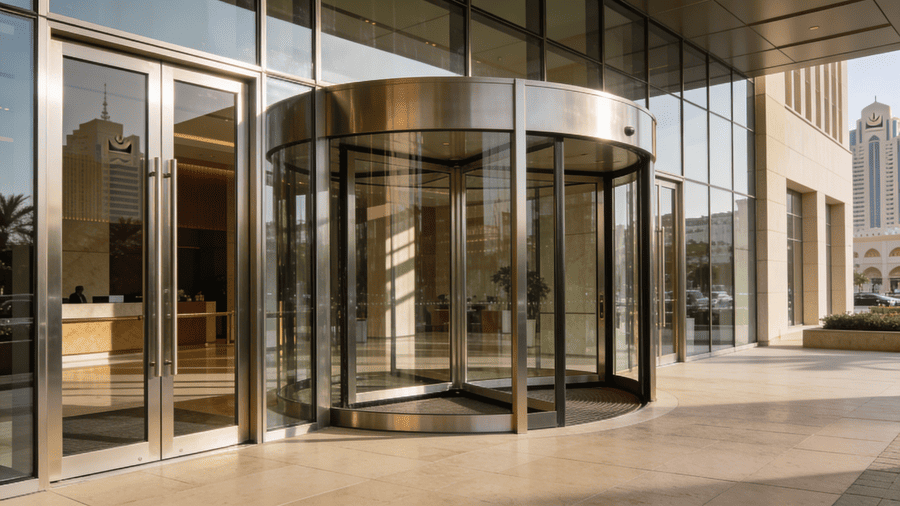
Table of Contents
1. Logic Sequencing & PLC Interlocking Architecture
2. Throughput Optimization: The Physics of Anti-Tailgating
3. The Sensor Ecosystem: Presence vs. Safety Calibration
4. Authentication Protocols: OSDP vs. Wiegand in Portals
5. Life Safety Integration: NFPA 101 & Emergency Logic
6. Global Compliance: SIRA, HCIS, and EN 16005 Standards
7. Architectural Human Factors & UX Engineering
8. The IoT Layer: Remote Monitoring & Predictive Analytics
9. Mechanical Lifecycle & Preventative Maintenance Strategy
10. Environmental Synergy and Thermal Efficiency
11. The Anatomy of a Rejected Entry: A Step-by-Step Case Study
12. Frequently Asked Questions (FAQ)
1. Logic Sequencing & PLC Interlocking Architecture
The “brain” of any high-performance mantrap is its logic controller. Unlike standard commercial doors that operate on simple relays, a mantrap requires a Programmable Logic Controller (PLC) or a specialized interlocking controller to manage the sophisticated “if-then” scenarios required for security.
The Anatomy of a Sequence
In a professional-grade portal, the logic follows a precise state machine:
-
Idle State: Both Door A (Exterior) and Door B (Interior) are closed and locked.
-
Request to Enter (RTE): A user presents a credential at Door A. The PLC checks the status of Door B. If Door B is confirmed “Secure & Bonded,” Door A unlocks.
-
Transition Phase: The user enters the vestibule. Door A closes. The system utilizes “Bonding Sensors” to ensure the magnetic or mechanical lock has successfully re-engaged.
-
Secondary Verification: Once the vestibule is “Airlocked,” the system may require a second credential or perform a volumetric scan before unlocking Door B.
The Physics of “Bonding”
In a high-performance integrated mantrap, we shift from simple locking to Active Bond Monitoring. High-performance mantraps utilize Electromagnetic Locks (Mag-locks) with integrated Hall Effect Sensors. A Hall Effect sensor measures the strength of the magnetic field. When Door A closes, the system doesn’t just check if the door is “shut”; it checks the Magnetic Bond. If the holding force is less than 1,200 lbs—perhaps due to a slight misalignment or a foreign object on the strike plate—the sensor sends a “Low Bond” signal to the PLC.
From a facility management perspective, “Low Bond” alerts prevent the most common cause of “System Hang.” If the system assumes Door A is secure when it isn’t, it may refuse to open Door B, effectively trapping the user. By integrating a Logic Buffer, the system can play an automated audio prompt: “Door A not secure. Please pull door firmly.” This reduces service calls by 30% and ensures that the “Airlock Integrity” is never compromised.
2. Throughput Optimization: The Physics of Anti-Tailgating
The primary ROI of a mantrap is the elimination of Tailgating (where an unauthorized person follows an authorized one) and Piggybacking (where two people enter on a single credential). According to industry data from ASIS International, tailgating remains the top physical security breach for 61% of organizations.
Volumetric vs. Weight-Based Detection
While early mantraps used weight mats to detect multiple people, modern high-performance systems utilize StereoVision or Time-of-Flight (ToF) technology.
-
StereoVision: This utilizes overhead dual-lens cameras that mimic human binocular vision. It creates a 3D depth map of the vestibule, allowing the system to distinguish between a single person carrying a large suitcase and two separate individuals.
-
ToF (Time-of-Flight): These sensors emit infrared light pulses and measure the time it takes for the light to bounce back. This allows for sub-millimeter accuracy in detecting “ghost” occupants or hidden intruders.
Calculating Persons Per Minute (PPM)
For facility managers, the “Throughput Math” is vital. A standard mantrap with biometric integration typically handles 5–8 Persons Per Minute (PPM). To optimize this without compromising security, engineers focus on the “Door Closing Speed” and “Credential Processing Time.” By reducing the “Interlock Buffer” (the time between Door A closing and the scan for Door B starting), we can increase throughput by up to 20% without lowering the security threshold.
3. The Sensor Ecosystem: Presence vs. Safety Calibration
A mantrap is a dance of sensors. In an integrated system, you are managing three distinct sensor layers: Activation, Safety, and Presence.
The “Ghosting” Problem and Microwave Technology
A major pain point for automatic door specialists is “false triggers” caused by environmental noise—shadows, reflective floors, or even blowing dust. High-performance systems utilize Dual-Technology Sensors, which combine Passive Infrared (PIR) with Microwave Doppler radar. Both technologies must agree that a human is present before the door activates, drastically reducing the wear and tear on automatic motors.
Furthermore, Presence Detectors ensure the vestibule is completely clear before the cycle resets. A common failure in lower-end systems is a cycle that hangs because a sensor is blocked by a discarded item or a user standing too close to the door. Advanced calibration allows the system to distinguish between a permanent obstruction (like a package) and a human, allowing for smarter error reporting to the security desk.
4. Authentication Protocols: OSDP vs. Wiegand in Portals
For a mantrap to be truly “High Performance,” the communication between the card reader and the door controller must be secure. For decades, the industry relied on the Wiegand protocol, which is now considered a significant security risk.
Why OSDP is Non-Negotiable
In 2026, we advocate for OSDP (Open Supervised Device Protocol). Unlike Wiegand, which transmits data in “plain text,” OSDP supports AES-128 encryption.
-
Bidirectional Communication: OSDP allows the controller to “talk back” to the reader. If someone tries to tamper with the reader on the outside of your mantrap, the controller detects the loss of communication and can trigger a “Lockdown State” immediately.
-
Anti-Passback (APB) Logic: A crucial part of the integration is Global Anti-Passback. If a user’s badge hasn’t been “seen” exiting the mantrap, it cannot be used to enter again. When combined with the physical barrier of the mantrap, this creates a “closed-loop” security environment.
5. Life Safety Integration: NFPA 101 & Emergency Logic
The biggest hurdle in mantrap engineering is the conflict between Security (keeping people out) and Life Safety (letting people out in an emergency). Systems must comply with NFPA 101 (Life Safety Code) and the International Building Code (IBC).
Fail-Safe vs. Fail-Secure Integration
-
Fail-Safe: In the event of a fire alarm or power outage, the locks lose power and open automatically. This is mandatory for most “Means of Egress” paths.
-
Fail-Secure: The locks stay engaged during power loss. This is typically reserved for high-value rooms like server vaults, but requires a manual “Panic Breakout” mechanical bar to be legally compliant.
The integration challenge here is the “Fire Alarm Tie-In.” A high-performance mantrap controller must be physically wired to the building’s fire panel. When a signal is received, the interlocking logic must be bypassed instantly, transforming the mantrap from a security barrier into a wide-open escape route.
6. Architectural Human Factors & UX Engineering
A mantrap shouldn’t feel like a cage. The psychological comfort of employees is essential for long-term adoption. This is where Architectural UX (User Experience) comes into play. Modern high-performance systems utilize curved glass, high-transparency materials, and integrated LED lighting to guide the user through the sequence.
Visual and Audio Cues
In high-performance portals, we use “Intuitive Feedback” systems:
-
LED Pathfinding: Red/Green LED strips on the door frames tell the user when to “Wait” and when to “Proceed.” This prevents users from pulling on a locked door, which is the #1 cause of motor failure.
-
Voice Prompts: Small, integrated speakers can provide gentle instructions like “Please step forward” or “One person at a time.”
-
Transparency: Utilizing high-clarity, low-iron glass reduces the feeling of claustrophobia within the vestibule, making the security process feel transparent and modern.
7. The IoT Layer: Remote Monitoring & Predictive Analytics
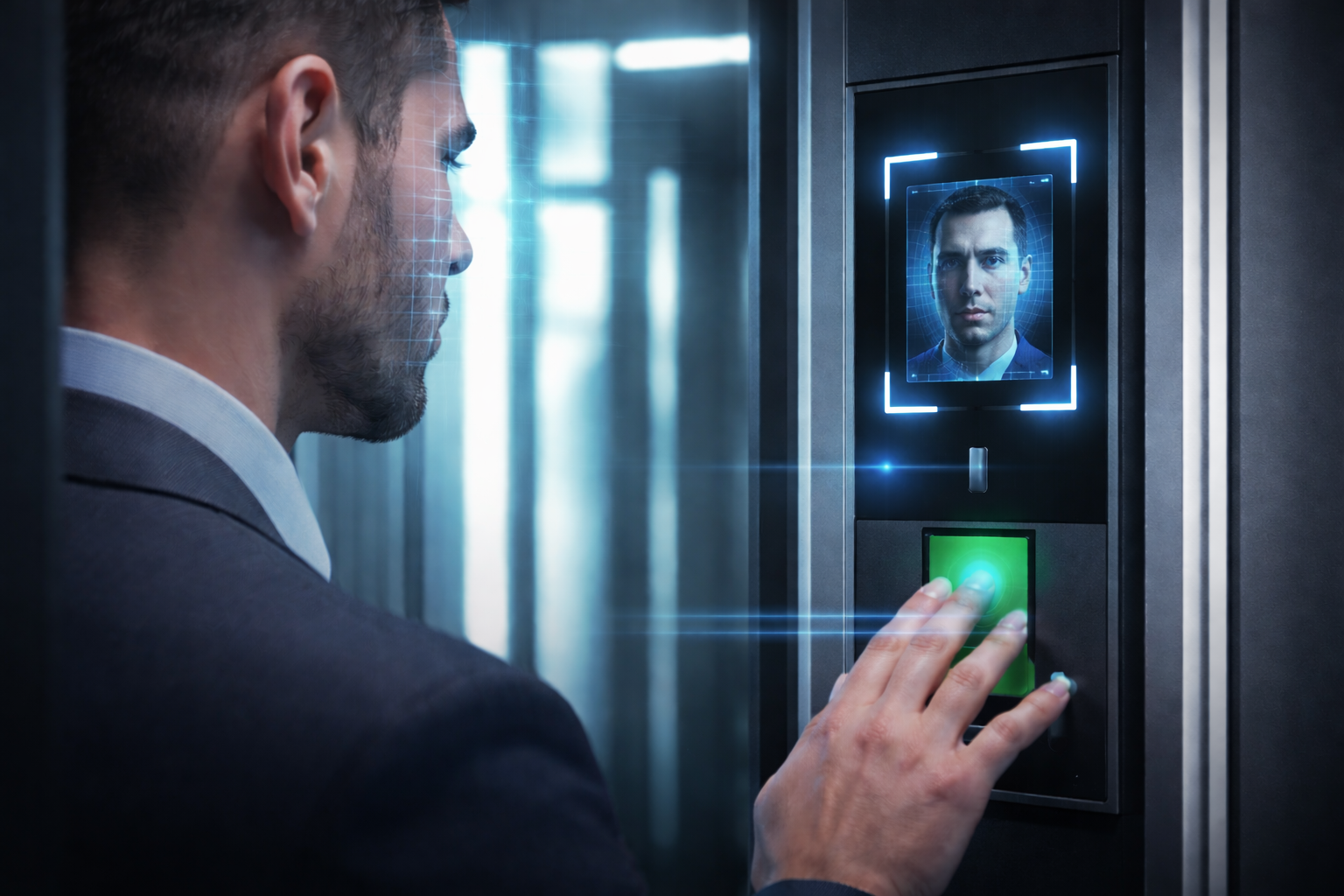
As an Automatic Door and Access Control specialist, your greatest tool is data. A 2026 mantrap is an IoT device that provides real-time health diagnostics.
Predictive Maintenance (PdM)
By integrating the door’s motor controller with a cloud-based dashboard, we can track “Cycle Health.”
-
Torque Monitoring: If the motor is using more power than usual to pull a sliding door, it indicates that the tracks are dirty or the rollers are worn.
-
Audit Trails: Every entry, exit, and “Rejected Entry” (tailgating attempt) is logged. This data allows security directors to identify peak traffic times and adjust “Interlock Delays” to optimize flow without needing a technician on-site.
8. Mechanical Lifecycle & Preventative Maintenance Strategy
Because a mantrap involves two doors cycling for every one person, the mechanical wear is 200% higher than a standard entrance. A “High-Performance” system is only as good as its maintenance schedule.
The Integrated Maintenance Checklist
To ensure a 10-year+ lifecycle, we recommend a quarterly “Integrated Audit”:
-
Track & Roller Inspection: Debris in the track is the leading cause of “Motor Overload” errors.
-
Battery Backup Testing: UPS units must be load-tested to ensure the doors can complete at least 100 cycles during a localized power failure.
-
Mag-Lock Alignment: Even a 2mm misalignment between the armature plate and the magnetic lock can reduce the holding force by over 50%.
-
Firmware Sync: Ensuring the access control software and the PLC firmware are updated together prevents “logic drift.”
9. Environmental Synergy and Thermal Efficiency
In the era of ESG (Environmental, Social, and Governance) reporting, a high-performance integrated mantrap is no longer viewed solely as a security asset; it is a critical component of the Building Envelope. For facilities operating in extreme climates—from the humid heat of the Middle East to the sub-zero winters of Northern Europe—the mantrap acts as a high-efficiency Thermal Buffer Zone.
The Physics of the “Airlock” Effect
A standard automatic sliding door entrance creates a “wind tunnel” effect. Every time the door opens, a massive volume of conditioned air escapes while unconditioned external air rushes in. This is known in engineering as Air Exchange Turbulence.
In an integrated mantrap, the PLC ensures that Door A and Door B are never open simultaneously. This creates a pressurized “neutral zone.”
-
The Pressure Seal: By maintaining at least one door in a “Secure & Bonded” state at all times, the system prevents a direct path for air to travel between the exterior and interior.
-
The Thermal Pocket: The air trapped inside the vestibule acts as an insulator. This “buffer” slows down the transfer of heat (or cold), ensuring that the HVAC (Heating, Ventilation, and Air Conditioning) system does not have to spike in energy consumption every time an employee enters the building.
Calculating Energy ROI: The 40% Efficiency Gain
When we talk about the Return on Investment (ROI) for a mantrap, we usually discuss security guard salaries. However, the Energy ROI is equally significant.
-
Single Door Entrances: Studies in building thermodynamics show that a standard high-traffic entrance can lose up to 35% of its internal climate energy in a single hour of peak usage.
-
Mantrap Entrances: By utilizing the interlocking logic, facility managers can reduce this “thermal bleed” by up to 40% per entry cycle.
For a facility with 500 employees entering and exiting daily, this translates into thousands of dollars in annual electricity savings. This allows the security department to present the mantrap project to the Chief Sustainability Officer (CSO) as a green building initiative, often unlocking “Green Grants” or LEED certification points.
Humidity and Dust Mitigation
Beyond temperature, the environmental synergy of a mantrap extends to Air Quality Control.
-
Dust and Particulates: In desert climates or industrial zones, the dual-door system prevents fine dust from blowing directly into sensitive areas like server rooms or laboratories.
-
Humidity Control: In coastal regions, high humidity can damage internal electronics over time. The mantrap serves as a “Dehumidification Buffer,” significantly reducing the moisture that enters the primary lobby.
Integration with Smart Building Management Systems (BMS)
A truly high-performance system is integrated into the Building Management System (BMS). Through a BACnet or Modbus interface, the mantrap can communicate its real-time status to the HVAC system. If the mantrap sensors detect that a door has been “Propped Open” for too long, the BMS can automatically adjust the airflow in the lobby to compensate, preventing the building’s climate from becoming unbalanced.
10. The Anatomy of a Rejected Entry: A Step-by-Step Case Study
To truly appreciate the value of an Integrated Mantrap System, one must look beyond the physical doors and analyze the digital and mechanical “handshake” that occurs during a security breach. In this case study, we examine a Tailgating Violation—the most common threat to high-security facilities.
Phase I: The Authorization Handshake (T-Minus 0 Seconds)
The process begins when an authorized employee presents a credential at the exterior reader (Door A).
-
The Logic: The OSDP-encrypted reader sends a 128-bit packet to the controller. The controller verifies the “Access Level” and “Time Zone.”
-
The Hardware Action: Upon verification, the PLC releases the high-voltage relay to the Door A automatic operator. The door slides open.
-
The Human Factor: As the user enters, an unauthorized individual (the tailgater) attempts to follow closely behind, slipping into the vestibule before Door A completes its closing cycle.
Phase II: The Volumetric Scan (T-Plus 3 Seconds)
Once Door A is physically closed and the magnetic bond sensors (MBS) confirm the perimeter is secure, the “Airlock” phase begins. This is where high-performance integration separates itself from basic interlocking.
-
The Sensor Trigger: A Time-of-Flight (ToF) sensor mounted in the ceiling of the vestibule emits thousands of infrared light pulses.
-
The Calculation: The system’s processor calculates the “Mass Density” and “Object Separation.” It isn’t just looking for movement; it is measuring the distance between the floor and the objects within the 3D space.
-
The Violation Detection: The algorithm detects two distinct “head masses.” Even if the tailgater is standing extremely close to the authorized user, the stereo-vision or ToF technology identifies the secondary heat signature or depth profile.
Phase III: The Lockdown and Notification (T-Plus 5 Seconds)
Within milliseconds of detecting the second person, the PLC enters “Violation Logic.”
-
Mechanical Lockdown: The request-to-exit (REX) sensor for Door B is instantly disabled. Door B remains in a “Fail-Secure” state. No amount of force or interior sensor triggering will unlock this door.
-
Visual & Audio Intervention: The integrated LED strips on the interior frame transition from a steady White to a Pulsing Red. Simultaneously, a pre-recorded high-fidelity audio file is broadcast through the vestibule speakers: “Security Alert: Multiple occupants detected. Please exit and re-enter individually.”
-
The Software Audit: In the security operations center (SOC), the access control software triggers a “High-Priority Alarm.” A pop-up window appears on the guard’s monitor, displaying the real-time video feed from the camera mounted inside the mantrap.
Phase IV: The Resolution and Reset (T-Plus 15 Seconds)
The system is now in a “Holding State.” It will not allow forward progress until the vestibule is cleared.
-
Forced Egress: Door A (the exterior door) is commanded to unlock, but only for egress. The tailgater, realizing they have been detected by the “Electronic Eye,” steps back out of the building.
-
The Clear-Zone Check: The ToF sensors continue to scan. Once they confirm the “Mass Density” has returned to zero (or to a single authorized occupant), the system resets.
-
The Audit Trail: The event is logged in the cloud database as a “Tailgating Attempt.” This data is crucial for facility managers to identify “Repeat Offenders” or “Security Soft-Spots” in their perimeter.
11. Conclusion & Strategic Implementation
Integrating mantrap doors with access control systems is a multi-disciplinary effort that combines mechanical engineering, electrical logic, and software security. When done correctly, it provides the only 100% solution to the tailgating problem while enhancing the architectural prestige of a facility.
For companies specializing in Automatic Doors and Access Control, the goal is to provide a “Single Pane of Glass” solution—one where the door hardware and the security software function as a single, unbreakable unit. This high-performance ecosystem ensures that your building remains secure, efficient, and ready for the challenges of 2026.
12. Frequently Asked Questions (FAQ)
Q: Can a mantrap be retrofitted into an existing hallway? A: Yes. While purpose-built circular portals are common, “virtual mantraps” can be created by integrating two sets of automatic sliding doors within an existing corridor using specialized interlocking logic controllers.
Q: Is a mantrap the same as a security revolving door? A: While they serve similar purposes, a mantrap (portal) typically offers higher security (including ballistic glass options) but lower throughput than a security revolving door.
Q: How does a mantrap handle ADA compliance? A: High-performance integrated systems are designed with wider diameters and longer timing sequences to accommodate wheelchairs, ensuring that security does not impede accessibility.
Q: What is the ROI of an automated mantrap system? A: By eliminating the need for a 24/7 security guard at a specific entrance, most organizations see a full Return on Investment (ROI) within 12 to 18 months.
Q: Can we use facial recognition inside the mantrap? A: Absolutely. Placing the biometric reader inside the vestibule is a best practice, as it ensures the environment is controlled and lighting is consistent for the highest accuracy.