



Sensors
Showing all 4 results
-
Sale!
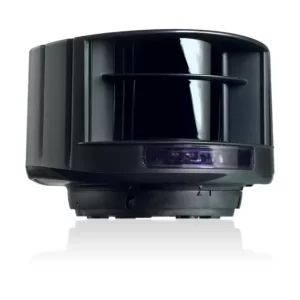
BEA – LZR-H100 3D Scanner
Original price was: AED 6,000.00.AED 5,400.00Current price is: AED 5,400.00. Add to cart -
Sale!
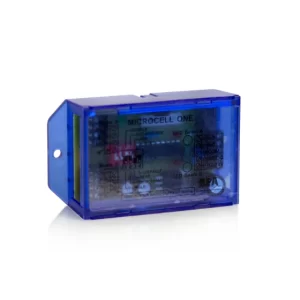
BEA – Single Channel Safety Beam Sensor
Original price was: AED 1,200.00.AED 1,080.00Current price is: AED 1,080.00. Add to cart -
Sale!
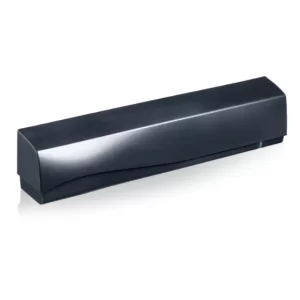
BEA – Zensafe Advance Sliding Door Safety Sensor – IXIO-DT1
Original price was: AED 1,599.00.AED 1,439.10Current price is: AED 1,439.10. Add to cart -
Sale!
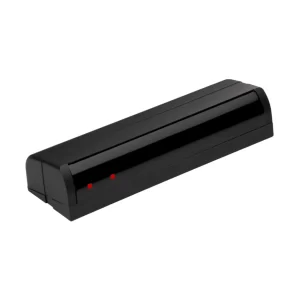
Hotron – HR100 Sensor with safety for Sliding door
Original price was: AED 976.50.AED 878.85Current price is: AED 878.85. Add to cart
Sensors act as the “eyes” and “nervous system” of automated entrance and barrier systems, detecting people, vehicles, and obstacles so that doors, gates, bollards, and road blockers can operate safely and efficiently. In projects supplied by Mace Gulf, these components are integrated into sliding doors, swing doors, revolving doors, turnstiles, speed gates, bollards, and barrier‑gate systems to enable automatic opening, controlled access, and real‑time safety responses.
Types of Sensor Devices
Common sensor devices used in access‑control and automation include:
-
Presence and motion sensors: microwave and infrared detectors that sense people approaching a sliding or swing door and trigger the operator to open.
-
Safety photocells: Infrared beam sensors (such as DIR‑10 or “Advanced” types) mounted on parking‑gate barriers and automatic doors that detect vehicles, objects, or pedestrians in the path and stop or reverse the moving part to prevent impact.
-
Loop detectors and vehicle‑presence sensors: inductive‑loop coils or wireless microwave/ultrasonic sensors that detect cars at boom barriers, parking‑gate entrances, and service‑road checkpoints.
-
Limit and position sensors: proximity switches and reed‑type sensors that confirm whether a bollard has fully risen or lowered, or that a door has reached its open or closed position.
-
Weight and load‑detection sensors: used in some high‑security doors and barrier systems to identify piggybacking or abnormal vehicle loads.
-
Light and weather‑adaptive sensors: photocells and light‑level detectors that adjust door‑opening logic based on ambient light, improving energy efficiency and user comfort.
-
Access‑control detectors: RFID readers, card‑based readers, biometric scanners, and facial‑recognition modules that verify user identity before allowing passage through a doorway, speed gate, or revolving door.
Role in Safety and Control
Sensor technology is critical for:
-
Preventing collisions between moving barriers and vehicles, pedestrians, wheelchairs, or trolleys by triggering immediate stop or reverse actions when an obstruction is detected.
-
Ensuring that doors and gates open only when someone is actually approaching, reducing unnecessary cycles, motor wear, and energy consumption.
-
Supporting emergency‑egress and fire‑alarm interactions by monitoring the status of doors and bollards and automatically overriding automation when required for safe evacuation.
-
Providing feedback to central access‑control and building‑management platforms so that security events—such as forced‑access attempts, unauthorised tailgating, or repeated obstructions—can be logged, counted, and analysed for incident review.
-
Enabling hands‑free, hygienic access, especially important in high‑traffic public spaces such as hospitals, airports, and shopping malls, where reducing touchpoints is both a comfort and safety priority.
Advanced Sensing Technologies
Modern entrance and barrier projects increasingly rely on intelligent sensing technologies such as:
-
StereoVision and 3D optical detectors in high‑security revolving doors to detect tailgating and piggybacking with high accuracy, distinguishing between one person and two people in the same compartment.
-
Wireless vehicle‑detection systems that eliminate the need for invasive in‑ground inductive loops, making installation and retrofit faster and cleaner while still providing reliable presence detection.
-
Multi‑sensor fusion, where several detector types (infrared, microwave, and ultrasonic) are combined in a single unit to improve reliability in complex or changing environments, reducing the risk of false openings or missed detections.
Why Sensor Integration Matters
For Mace Gulf’s portfolio of automatic doors, revolving doors, bollards, and gate barriers, correctly selected and configured sensor devices ensure that each entrance behaves intelligently, reliably, and in line with the site’s security and operational requirements. By using high‑quality OEM‑compatible solutions—such as safety photocells for boom barriers, infrared detectors for sliding doors, vehicle‑presence sensors for parking‑gate systems, and advanced optical devices for high‑security entrances—Mace Gulf delivers systems that are as safe and efficient as they are visually seamless.
In addition, these components directly support Mace Gulf’s focus on low‑maintenance, high‑uptime installations, because they:
-
Reduce mechanical stress by stopping doors and barriers before they hit obstacles.
-
Enable predictive maintenance through diagnostic logs and event‑counting features.
-
Help meet building‑safety, fire‑code, and anti‑terrorism standards by ensuring that automated systems always respond correctly and consistently.
By integrating the right sensing technology into every project, from high‑security government entrances to residential compounds and commercial parking, Mace Gulf ensures that access‑control solutions are not only secure and powerful but also intuitive, safe, and comfortable for everyday users.