



Antimony
Enhancing Safety and Strength Across Industries
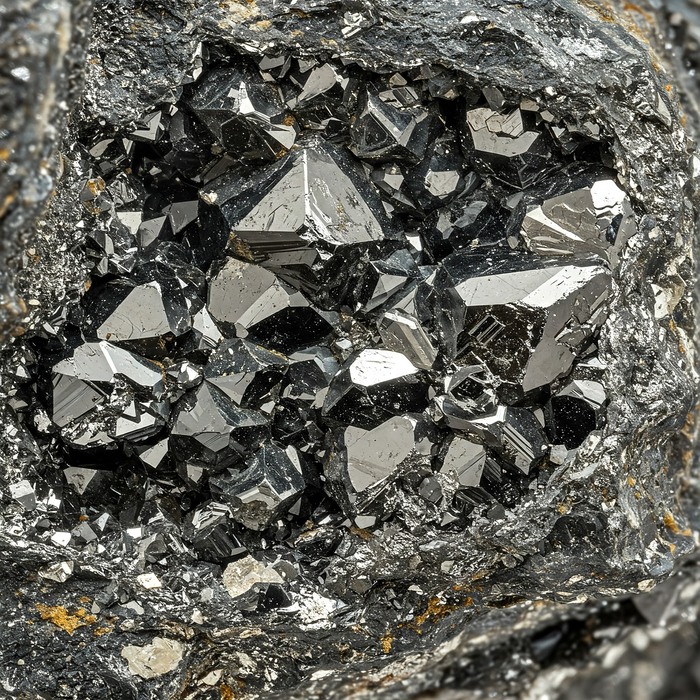
Antimony is a lustrous, silver-gray metalloid primarily found in its mineral form, stibnite (Sb₂S₃). Renowned for its high melting point and brittleness, antimony is integral in producing antimony metal and various compounds. Its unique properties make it indispensable in industries such as electronics, flame retardants, batteries, and alloys, where it enhances material strength, durability, and safety.
Get A Custom Quote Made Just For You.

High Melting Point

Alloying Capability

Flame Retardant Properties

Pigment Production
Applications
Battery Manufacturing: Antimony is a key component in lead-acid batteries, enhancing performance by increasing cycling life and reducing self-discharge rates, vital for automotive and industrial uses.
Flame Retardants: Antimony trioxide is extensively used as a flame-retardant synergist, especially in combination with halogenated flame retardants, crucial for producing fire-resistant plastics, textiles, and electronics.
Alloy Strengthening: By alloying with metals like lead and tin, antimony increases hardness and corrosion resistance, essential for ammunition, bearings, and solder.
Pigments: Antimony compounds are used to create pigments like Naples yellow, widely utilized in paints, ceramics, and plastics for their vivid and stable color properties.




Why Choose MACE Gulf Trading for Talc
Mace Gulf Trading is committed to delivering high-quality antimony sourced from sustainable and regulated mining operations in Libya and Afghanistan. Our meticulous sourcing ensures consistent quality and supply for various applications. We prioritize eco-friendly methods in sourcing minerals, ensuring ethical operations and minimal environmental impact. Our direct relationships with miners allow us to provide top-quality minerals at competitive prices, eliminating middlemen. With ISO 9001:2015 certification, we demonstrate our dedication to continuous improvement and customer satisfaction.
Antimony is a chemical element with the symbol Sb and atomic number 51, positioned in the metalloid group of the periodic table. It behaves somewhat like a metal but is more brittle and less conductive than typical metallic elements. In its pure form, it appears as a hard, silvery‑gray solid that breaks easily into flakes or powder.
Natural Occurrence
This element is found mainly in the sulfide mineral stibnite (Sb₂S₃), though it occurs in more than 100 mineral types. Deposits are mined in regions such as China, Russia, Tajikistan, Bolivia, and parts of Africa and Central Asia. Small amounts also arise as a by‑product during the processing of lead and certain other base‑metal ores.
Industrial Applications
A major use is in flame‑retardant additives for plastics, textiles, and composite materials, helping to reduce fire risk in electronics, construction products, and transport interiors. It is also added to lead‑based alloys to improve hardness and wear resistance in components such as bearings and certain types of batteries.
In electronics, limited quantities appear in specialized semiconductors and infrared detectors, where its electronic properties assist in tuning performance. It also appears in niche applications such as ceramics, glass, pigments, and fireworks, as well as in historical cosmetic uses where sulfide‑based compounds were applied to the eyes.
Safety and Exposure
Antimony and many of its compounds are considered toxic; exposure typically occurs through inhalation of dust or fumes in industrial environments or contact with contaminated soils and water sources. High‑level exposure can cause irritation of the eyes and lungs and may affect organs such as the heart, liver, and digestive system. Because of these risks, proper ventilation, protective equipment, and environmental controls are important wherever the raw material or its compounds are processed.