



Table of Contents
Securing Entrances with Smarter Gate Barrier Solutions
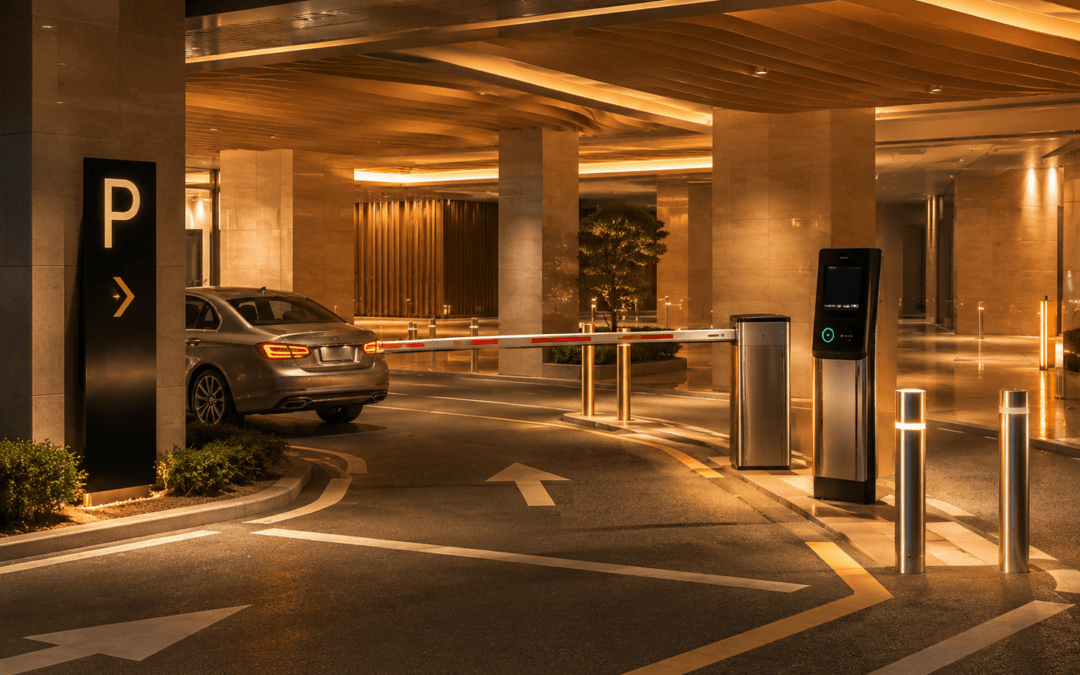
With the ever-changing commercial, residential and industrial world these days, it’s much more than opening and closing an entrance when it comes to controlling access to vehicles. It’s about providing a safer, smoother and more streamlined entrance experience to every property user. Whether it’s at an office, gated community, hotel, warehouse, mall, parking lot or high security location, gate barriers are essential at all of them to ensure that people enter, when they enter, and how vehicles move through a property.
An effective gate barrier system can help minimize unauthorized access, enhance traffic flow, facilitate parking management, and provide site security. Recent automatic gate barriers are able to connect to access control, RFID readers, remote controls, ANPR cameras, loop detectors, safety sensors, and parking management solutions – rather than just relying on the traditional manual process or on simple entry points. They are suitable and dependable for properties that require safety and convenience.
We know that every entrance has different requirements and we welcome you to MACE Gulf and make you feel at home. There are situations that demand high-speed transportation and others that demand access control, high-stress operation or integration with larger security systems. That’s why it’s crucial to select the right gate barrier solution for the long-term, safety and daily reliability.
This blog covers the advantages of gate barriers, their applications, various types and how they contribute to making modern properties safer and smarter for vehicle access.
What Are Gate Barriers and Where Are They Used?
Gate barriers or boom barriers, sometimes called barrier gates, are access control systems used to control access to restricted, private and monitored areas. These are generally a robust barrier arm that can be moved up and down to let or prevent passage. If the access is granted, the arm is raised for the vehicle to pass. After a safe entry or exit, the arm drops back down to lock in to the exit point.
In layman’s terms, a gate barrier is the first level of control to regulate vehicle movements. A barrier system forms an established and systematic entrance point as opposed to keeping an entrance open or using full-time, hands-on guards. This can assist property owners, facility managers and security teams in determining who may be allowed in, when they may be allowed in and the flow of traffic through the property.
In areas where it is crucial for vehicles to be controlled, gate barriers are often employed. They include commercial buildings, residential communities, office towers, shopping malls, hotels, hospitals, schools, airports, warehouses, industrial facilities, parking areas, toll points, construction sites and secure government and private facilities. They are also common in parking management systems to control access, manage parking tickets, and deter illegal parking.
Today’s gate barriers are not just simple mechanical arms. They can be linked up to sophisticated access control systems, including the number plate recognition camera, intercom system, ticketing machine, loop detector, safety sensors, and the complete parking management platform, in addition to a number of other RFID and remote control card systems. This enables the system to run automatically, less frequent manual intervention, and enhance security and convenience.
The primary application of the gate barrier is to provide a controlled entrance while not slowing down the normal operation of the facility. This is particularly true if you have a busy property. A carefully chosen barrier gate can help maintain the appropriate access control whilst aiding high vehicle throughput during peak hours. It offers a good, cost effective solution for areas with less foot traffic to secure the entrance and maintain order.
From residential buildings to corporate entrances, logistics facilities to paid parking areas, gate barriers can enhance vehicle access and make it safer, smarter and more efficient. They provide a higher level of control on each site by using both physical security and state-of-the-art automation.
Why Gate Barriers Matter for Security and Access Control
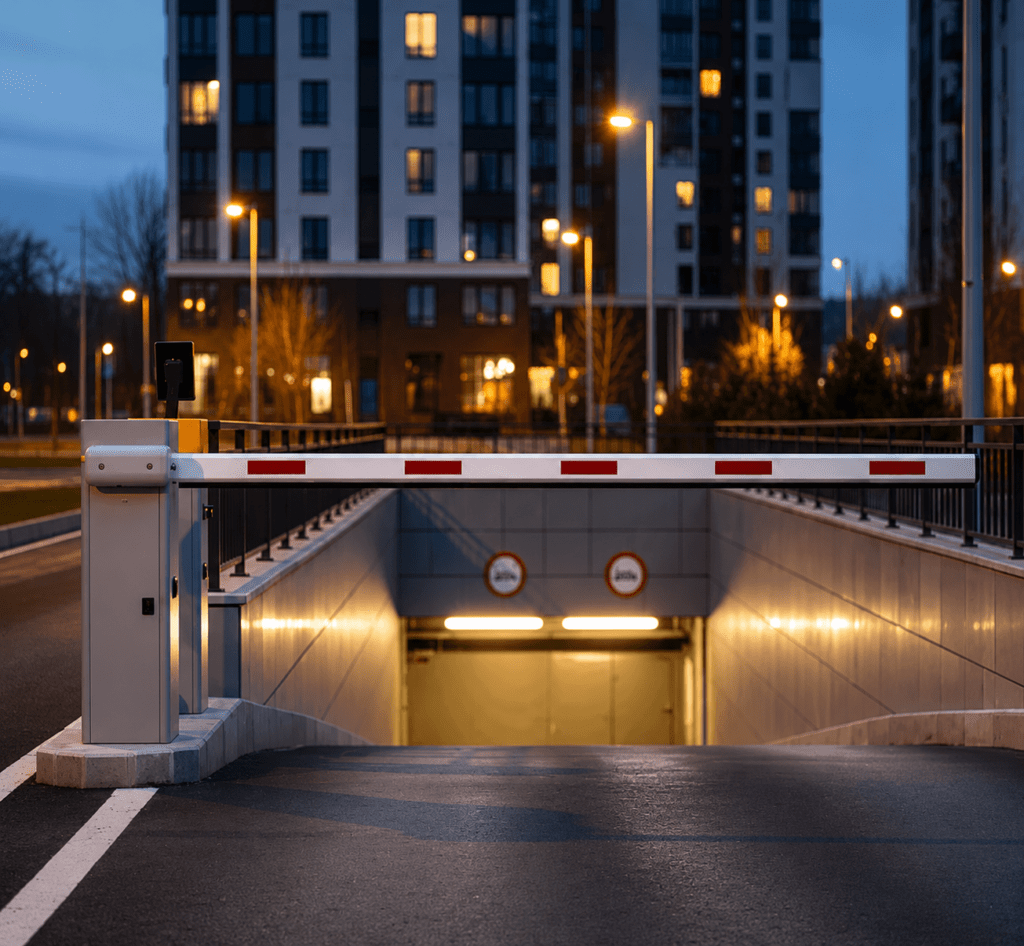
Gate barriers are a crucial part of the security infrastructure in today’s world as they provide a definite and definite point for vehicles to access. A gate barrier can provide a permanent barrier to access to the property, as opposed to relying on a person to keep it locked or only open when requested, thereby helping to control people’s access to the property, when and how access is gained and how vehicles move through the property. These are particularly useful in buildings and facilities that require security, control of access for parking and efficient traffic flow on a daily basis.
Gate barriers are essential for one of the primary reasons they are important: to prevent illegal entry. The first impression of an entrance, which should be obvious, should convey that the site is controlled and monitored. This helps keep vehicles out of restricted areas and safeguard assets, private infrastructure and residents, employees and visitors. This initial level of protection can minimise the risk of theft, misuse of parking lots, vandalism, and unsafe vehicle movement for commercial properties, warehouses, residential communities, hotels and parking facilities.
When combined with technology like RFID cards, remote controls, intercom systems, ticket dispensers, QR codes, mobile access or cameras with automatic number plate recognition, gate barriers can effectively assist with tighter access control. These integrations will enable more efficient management of every vehicle entry/exit. Facility managers will be able to monitor the movement of vehicles, access activity and have a better idea of who has access to the property. This traceability feature is particularly beneficial for locations where monitoring, user management or parking responsibility is lacking.
Gate barriers can also enhance vehicle flow in busy areas. Without an effective way to control vehicle movement, entrances to malls, paid parking areas, office towers, residential compounds, hospitals, schools and others can become congested quickly. One of the main advantages of a good barrier system is that it makes people have to use different entrances and exits, it decreases confusion and makes the parking area less prone to unauthorized parking and it enables a more structured flow of traffic. This helps to provide a more seamless experience for users and enhances the functionality and performance of the website.
One more great benefit is a decreased reliance on manual security tasks. Automated gate barriers can process automated routine access approvals quickly and reliably as opposed to having to rely on a guard to manually open or close the gate. This does not eliminate the requirement for security personnel, but it frees them up to attend to any unusual circumstances, to watch and assist as needed, and not be burdened with repetitive gate operation.

Key Benefits of Installing Gate Barriers
One of the most practical solutions to enhance vehicle access control at any property is by installing a gate barrier. A barrier gate presents a distinct system for the control of vehicles prior to entry at any residential community, office building, parking facility, mall, hotel, warehouse or industrial site. Provides a more effective level of control, assists in minimizing unauthorized access and facilitates a more streamlined flow of vehicles during the day.
The gate barriers are one of the most significant advantages of using them is safety. Physical blocking of vehicles at the entrance provides security staff with time to check the driver, verify access and observe suspicious activity before granting entrance. This is particularly relevant for buildings that are frequently visited, have deliveries, staff vehicles and service providers. Entries of cars are now more regulated and orderly instead of free.
Gate barriers are also effective as a visual barrier. A driver will see a controlled entrance with a barrier arm, access reader or camera or security cabin and will know that it is monitored. This can help deter unauthorized vehicles from making an attempt to enter private or restricted areas. This first layer of control can mean the difference in protecting people, parking spaces, equipment, stock and/or sensitive infrastructure for properties that require protection.
One more benefit is the assistance that the security staff gets by using the security gate barriers. In the absence of a physical barrier, security guards may have only a partial ability to control a vehicle attempting to force its way through an entrance. A barrier system can contribute to a safer check point by providing a means of managing access with push buttons, remote controls, intercoms, access readers or even by CCTV monitoring. This benefits them in terms of a more efficient operation and enables them to concentrate on supervising, dealing with visitors and dealing with emergencies rather than having to manually control each vehicle.
Today, modern gate barriers may be plugged into advanced access control systems as well. These can be used with RFID cards, remote controls, mobile access, QR codes, ticketing machines, loop detectors, intercom systems, CCTV cameras and automatic number plate recognition. These integrations allow for the rapid entry of approved vehicles, and block unauthorized vehicles. This will help to shorten waiting times, enhance daily operations and make it more enjoyable for residents, employees, visitors and customers.
Another benefit of gate barriers is that they can help to improve traffic flow. Uncontrolled vehicle movement can easily lead to congestion in congestive areas like malls, office towers, hospitals, residential compounds, and paid parking lots. The right barrier system is able to clearly distinguish entrance areas from exit areas, control traffic during peak hours, direct cars to the appropriate lanes, and avoid confusion at the entrance. This will give a better and more professional access to the site.
One of the advantages is the decrease of tailgating. Tailgating occurs when a second vehicle attempts to follow too closely behind a vehicle that is authorized to be there. This risk can be reduced by installing a reliable gate barrier which has an appropriate opening and closing speed, safety sensors and loop detectors. The system can also be integrated with vehicle monitoring software and cameras at higher security sites to track vehicles more closely.
Many other vehicle control solutions can be more expensive than gate barriers. They are strong and functional, and they can be used in both small and high traffic entrances. They can also decrease the requirement for manual gate usage since part of the procedure is automated. This is no substitute for a trained security staff member, but it does help to eliminate repetitive work and overall inefficiency.
Gate barriers are adaptable and scalable for longterm use. A single barrier can be used at a small residential or private parking lot, or several barriers can be linked to an overall parking management or access control system for larger properties. This allows them to be used in various settings, from villas to commercial buildings, to industrial sites and large public parking lots.
Types of Gate Barriers for Different Properties
The type of gate barrier needed will vary depending on the method of access, available space, traffic and usage of the building. Decisions made about which barrier to choose are not simply a product selection, they are a match between the system and how it will be used in the property. Requirements differ depending on the context, for instance, a residential parking entrance will not have the same requirements as a logistics facility, shopping mall, hotel, or high-security industrial facility.
The most popular is the standard automatic boom barrier. This type features a vertical barrier arm that is attached to a straight barrier, and can move upwards and down to let vehicles pass. It can be used in most normal uses such as houses, offices, schools, hotels, parking lots, and office buildings. Standard boom barriers are frequently used due to their practicality, reliability, and being an appropriate choice for entrances that have enough overhead clearance and medium to high vehicle traffic.
Folding arm barriers are better on a property where the ceiling height is low. The arm design when these barriers open allows them to be used in basement car parks, underground car parks and covered parking lanes. Depending on the building you are entering, the space to raise the straight arm from the entrance may be insufficient for a safe lift in many residential towers and commercial buildings.
Heavy duty barriers are used for sites that are required to operate all day. These are typically found in warehouses, logistics facilities, industrial sites, employee parking spaces and in commercial entrances where vehicles are regularly coming in and out. They are typically designed to operate in challenging environments and with extended lifespans. These properties are more important than simple access control for these properties.
For areas that do not need automation, or have low traffic volume, manual barriers are a simpler choice. They can be employed for temporary access; construction projects; private roads; small parking lots; or low traffic service roads. Though they’re not as streamlined as automatic systems, they can be helpful when the primary task is to restrict vehicles in a simple way and at a more affordable price.
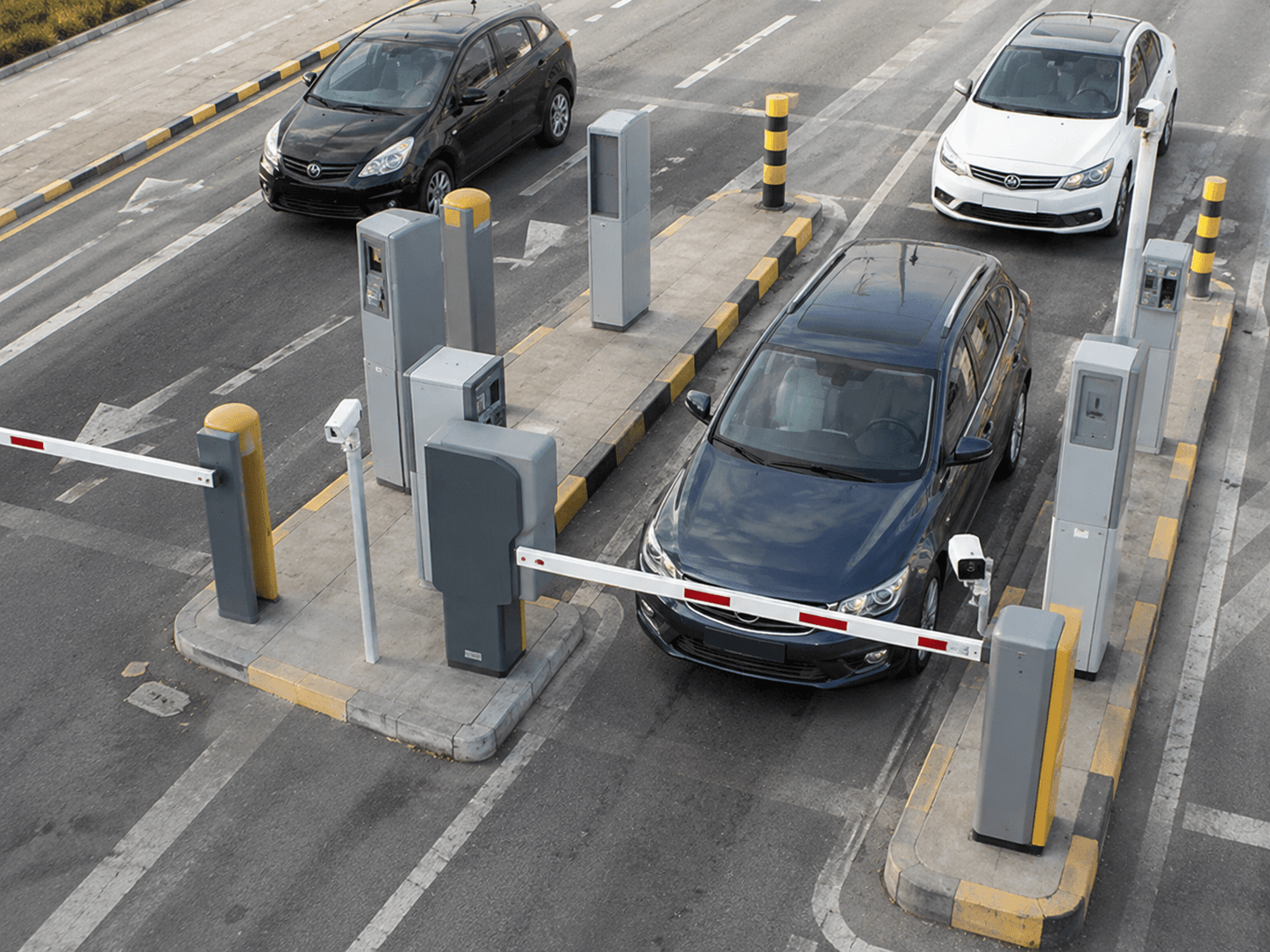
Typically, a parking barrier system is chosen for areas that require vehicles to enter and exit from a parking space as part of a larger movement of vehicles. They are commonly seen in malls and hospitals, airports, hotels, public parking areas and commercial developments. Typically, this barrier is integrated into a larger parking system that can contain a ticketing machine, payment station, entrance and exit stations and vehicle detection systems.
Larger entrances or unusual site designs may necessitate longer arm barriers or dual barriers. A single standard barrier may not be sufficient in installations with more than 1 lane wide, particularly in mixed use or large vehicle entrances. In such situations, the system needs to be carefully designed to match the lane size, vehicle type and the opening speed needed.
In addition, some properties might need a layered entrance design in which the gate barrier is complemented with more robust physical security equipment. A typical barrier arm can be sufficient for use with vehicles on a daily basis, while other systems like road blockers or bollards may be installed if greater protection is required. It is typically used in sensitive facilities, VIP entrances, industrial sites, as well as at locations where vehicle impact resistance is a component of the security requirements.
Safety Features in Modern Automatic Gate Barriers
Today, gate barriers are not just used to manage vehicles, they also need to be safe around drivers, pedestrians and security. With barrier gates being found in high-traffic entryways and parking lots, safety measures are crucial to minimize accidents, minimize damage to vehicles, and keep things running as smoothly as possible on a daily basis.
Obstacle detection is an important safety aspect. Many automatic barriers can be linked to infrared sensors, induction loops and/or pressure-sensing safety edges which are able to detect vehicles or objects in the way of the barrier. When the arm detects something while closing, the system can stop/reverse it, thereby helping to prevent collision. Grounded safety loops can also help to keep the barrier up even when a vehicle is still in the barrier.
Another critical aspect to safe operation is visibility. The barrier movement is indicated to the driver by reflective strips, LED lights, flashing indicators and warning alarms, particularly in low light conditions or at night. Some even employ soft-start and soft-stop movement which open and close the arm with gradual movements rather than sudden ones.
Many gate barriers have manual release mechanisms, battery backup or fail-safes in case of a power outage or emergency. The above features enable the security teams to lift the barrier manually or maintain the operational state of the barrier when necessary. In some situations for parking and access control, breakaway arms can also be used to lessen the impact in case the barrier is struck.
Why Choose MACE Gulf for Gate Barrier Installation
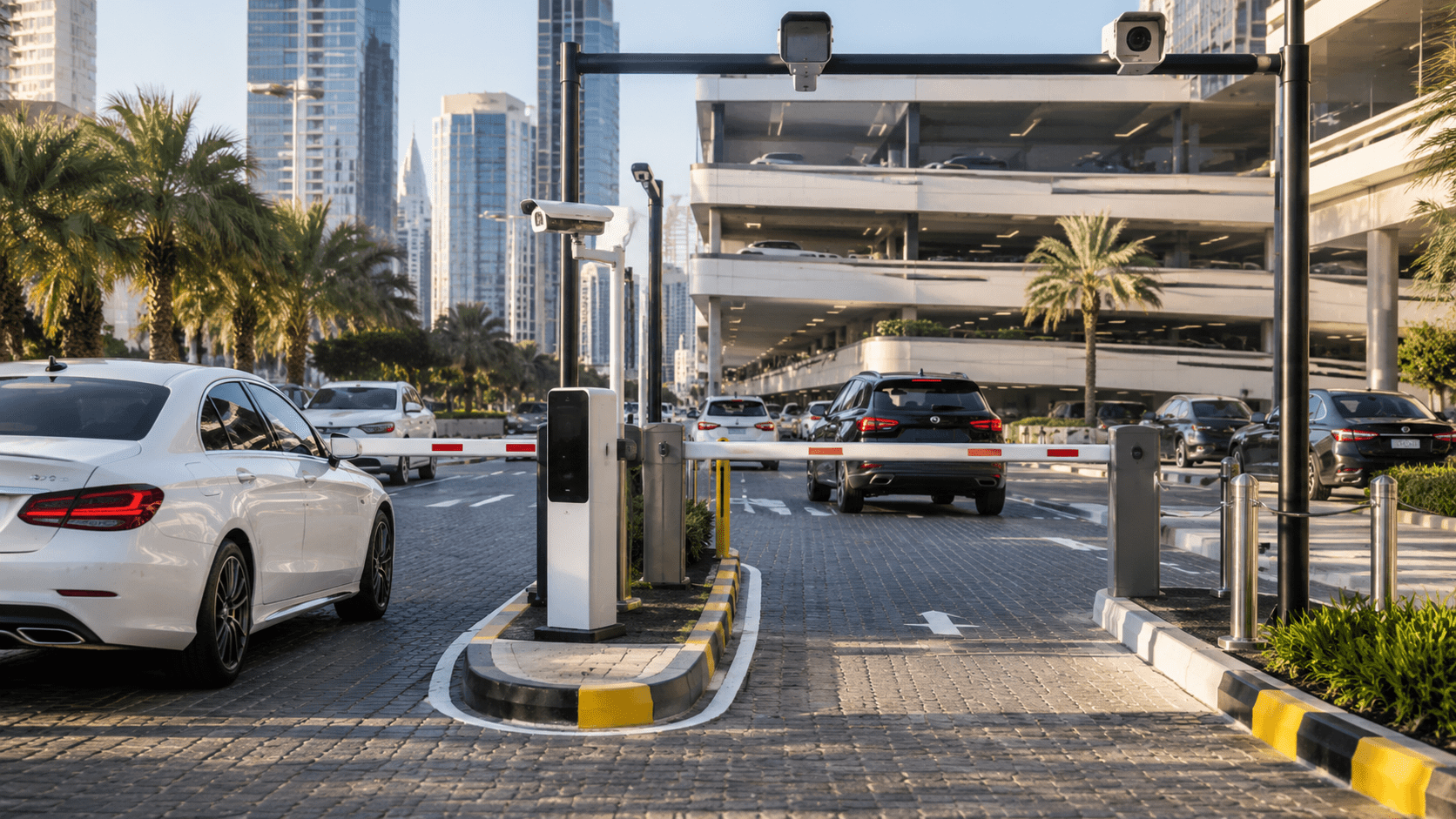
MACE Gulf offers the most dependable gate barrier solutions to ensure safe, efficient and controlled vehicle entry. We work with you from the initial site assessment through product selection and installation, integration and post-sales support to ensure that each system is appropriate for the day-to-day use and performance of the property.
Having configured access control, parking management, automatic doors, road blockers, bollards and entrance automation systems, MACE Gulf has the experience necessary to provide solutions for residential, commercial, industrial and high security applications.
Conclusion
Gate barriers are a sensible and effective barrier solution for properties that require safer, smoother and more controlled vehicle entry. They are used for vehicle movement organisation in residential buildings, commercial facilities, parking areas, warehouses, hotels, high security sites etc. and they can also aid in entrance management.
With careful consideration of the type of barrier, the safety features, and access control integrations, property owners can streamline daily operations, minimize unauthorized access, and provide a more secure experience for residents, employees, guests, and customers.
Our gate barrier solutions at MACE Gulf are tailored to the needs of each site, ensuring that our clients are creating more efficient, safer, and intelligent gateways.
Frequently Asked Questions (FAQ)
Q: What are gate barriers used for?
A: Gate barriers are used to control vehicle entry and exit in residential, commercial, industrial, and parking environments. They help manage access, improve traffic flow, and prevent unauthorized vehicles from entering restricted areas.
Q: Where can automatic gate barriers be installed?
A: Automatic gate barriers can be installed at residential buildings, office towers, shopping malls, hotels, hospitals, schools, warehouses, construction sites, parking areas, and industrial facilities.
Q: What types of gate barriers are available?
A: Common types include automatic boom barriers, folding arm barriers, heavy-duty barriers, manual barriers, and parking barrier systems. The right type depends on the entrance layout, traffic volume, ceiling height, and security requirements.
Q: Are gate barriers suitable for basement parking entrances?
A: Yes. Folding arm barriers are especially suitable for basement parking and covered entrances where there is limited overhead clearance for a standard straight barrier arm.
Q: Can gate barriers be connected to access control systems?
A: Yes. Gate barriers can be integrated with RFID cards, remote controls, intercoms, QR readers, ticketing systems, loop detectors, CCTV, and automatic number plate recognition systems for smoother and more controlled access.
Q: How do gate barriers improve security?
A: Gate barriers create a controlled entry point by stopping vehicles before they enter a property. This helps security teams verify access, reduce unauthorized entry, and manage vehicle movement more effectively.
Q: What safety features do modern gate barriers include?
A: Modern gate barriers may include obstacle detection, safety loops, reflective strips, LED lights, warning alarms, soft-start and soft-stop movement, manual release, battery backup, and emergency override options.
Q: How do I choose the right gate barrier for my property?
A: The right gate barrier depends on your site’s lane width, available space, traffic volume, required opening speed, safety needs, and integration requirements. A professional site assessment can help determine the most suitable option.
Q: Does MACE Gulf provide gate barrier installation?
A: Yes. MACE Gulf provides gate barrier solutions, including site assessment, product selection, installation, integration, and after-sales support for residential, commercial, industrial, and high-security properties.
References
- Sumble. (2025, November 24). Gate barriers: Competitors, complementary techs & usage. Sumble. https://sumble.com/tech/gate-barriers
- Omker. (2026, January 13). What exactly is a barrier gate and how does it work? Omker. https://www.omker.com/What-Exactly-Is-A-Barrier-Gate-And-How-Does-It-Work-id47542075.html
- ACIX Middle East. (2025, May 30). The advantages of using an arm barrier gate. ACIX Middle East. https://www.acixme.com/article/the-advantages-of-using-an-arm-barrier-gate/
- Chen, J. (2026, March 19). 28 types of security barriers and their major applications. JACKWIN. https://jackwinsafety.com/types-of-security-barriers/
Great content! Keep up the good work!